
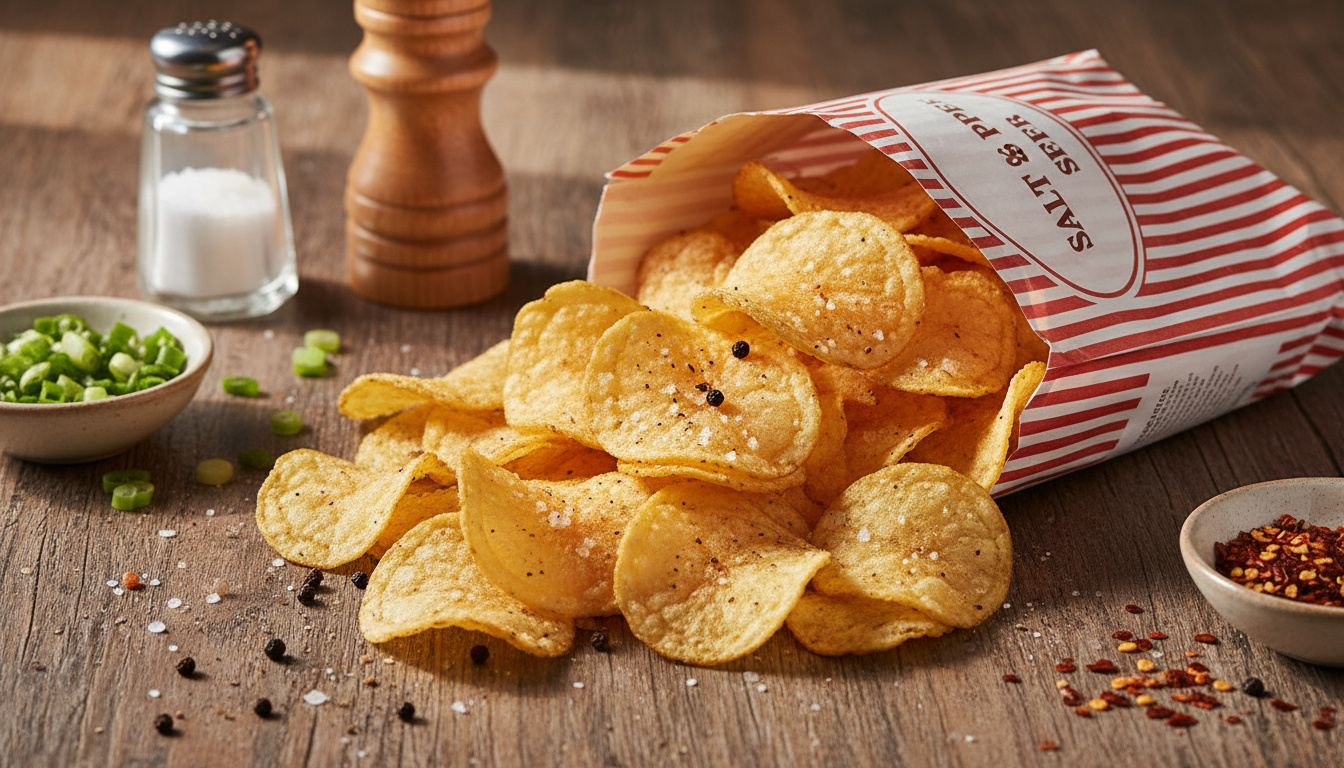
Salt and pepper chips occupy a unique position in the snack aisle, promising a return to basics with just two seasonings enhancing the potato’s natural flavor. The combination of crystalline salt and cracked black pepper suggests simplicity, yet execution varies dramatically between manufacturers, with some versions delivering bold savory notes while others present unexpected aromatic profiles.
Consumer expectations for this flavor profile center on balance: the salt should amplify the potato’s umami while the pepper contributes a gentle heat and floral complexity. However, recent taste testing reveals significant deviation from this ideal, with certain brands incorporating additional acids that shift the flavor toward tanginess rather than pure savory seasoning.
What Are Salt and Pepper Chips?
Sea salt and cracked black pepper on potato base
Publix, Cape Cod (limited data available)
Mixed; varies by formulation and cooking method
Minimalist ingredient list with bold seasoning
- Kettle-cooked varieties generally provide superior texture and crunch
- Flavor intensity depends heavily on pepper granule size and distribution
- Some formulations include citric acid, creating unexpected tartness
- Pepper notes often require consumption of multiple chips to fully develop
- Salt levels in tested brands have proven difficult to detect for some tasters
- Aromatic profiles may include vinegar notes not indicated in ingredient lists
| Fact | Details |
|---|---|
| Typical Serving | 28g |
| Calories | 140-160 (estimated range) |
| Sodium | 200-300mg (estimated range) |
| Vegan Status | Usually yes; verification required per brand |
| Texture | Kettle-cooked or standard fried |
| Primary Ingredients | Potatoes, vegetable oil, salt, pepper |
| Common Additives | Citric acid, maltodextrin, dextrose |
| Availability | Regional; not all brands nationally distributed |
Best Salt and Pepper Chips Brands and Reviews
Publix Kettle Cooked Salt & Pepper Chips
Publix Kettle Cooked Salt & Pepper Chips generated mixed reactions during independent taste testing. Tasters reported an unexpectedly strong vinegar aroma upon opening the bag, contradicting the expected neutral salt-and-pepper scent. The initial flavor profile presented as sweet and tart rather than distinctly salty or peppery, leading reviewers to compare the taste to barbecue chips rather than the advertised seasoning.
The presence of citric acid in the ingredient list appears responsible for this flavor deviation. Testers noted that the pepper flavor only became apparent after consuming multiple chips sequentially, while the salt remained largely undetectable throughout the tasting experience. This formulation suggests a significant departure from traditional salt and pepper expectations.
Cape Cod Sea Salt & Cracked Pepper Chips
In contrast, Cape Cod Sea Salt & Cracked Pepper Chips received positive feedback for texture and taste execution. Reviewers described the product as offering a “full, hearty crunch and an irresistible taste,” attributes attributed to the kettle-cooking process. The brand appears to have achieved a more balanced execution of the flavor concept, though specific details about salt and pepper intensity remain limited in available documentation.
Manufacturing processes differ significantly between brands. The inclusion of citric acid, maltodextrin, or other flavor enhancers can fundamentally alter the expected salt-and-pepper profile, creating taste experiences that range from savory to tangy.
Salt and Pepper Chips Recipe: How to Make at Home
Basic Approach
Creating salt and pepper chips at home requires minimal ingredients but demands attention to technique. The fundamental components include starchy potatoes, high-heat cooking oil, sea salt, and freshly cracked black pepper. The critical factor lies in achieving uniform potato slices and proper oil temperature to ensure crispness without burning.
Preparation Method
Slice potatoes to approximately 1/8-inch thickness using a mandoline for consistency. Soak slices in cold water to remove surface starch, then dry thoroughly to prevent oil splatter. Fry in batches at 350°F until golden, or bake at 400°F on oiled baking sheets, turning occasionally. Season immediately while hot, tossing with salt and coarse-ground pepper to taste.
Apply salt and pepper within seconds of removing chips from heat. The residual oil helps the seasonings adhere, while the surface moisture from cooling chips can cause spices to clump if applied too late.
Salt and Pepper Chips Nutrition and Are They Healthy?
Nutritional Profile
Specific nutritional data for salt and pepper chips remains limited in publicly available databases. Generally, potato chips in this category contain approximately 140-160 calories per 28-gram serving, with sodium content varying based on the manufacturer’s salt application rate. The addition of pepper contributes negligible caloric value but may offer trace antioxidants.
Vegan and Dietary Considerations
Most salt and pepper chip formulations consist of plant-based ingredients, suggesting suitability for vegan diets. However, cross-contamination risks in manufacturing facilities and the potential use of animal-derived processing agents in certain brands necessitate careful label examination. Certification from recognized vegan organizations provides the most reliable verification.
Health Implications
As with all fried snack foods, moderation remains essential. The sodium content, while variable, contributes to daily intake limits, and the frying process creates acrylamide formation. Kettle-cooked varieties may absorb slightly less oil than standard continuous-fried chips, but the difference remains marginal from a nutritional standpoint.
Ingredient formulations change without notice. Always verify current packaging for allergen warnings, vegan certification, and updated nutritional information, as recipes vary significantly between production batches and regional facilities.
The History of Salt and Pepper Chips
Comprehensive historical documentation regarding the origin of salt and pepper chips remains unavailable in current research. While the flavor combination represents one of the most fundamental approaches to potato seasoning, specific attribution to a particular decade, region, or manufacturer cannot be confirmed based on existing sources.
- : Some industry observers suggest the flavor emerged in UK crisp markets, though primary sources remain unverified.
- : United States brands reportedly expanded flavor portfolios to include minimalist seasoning options.
- : Kettle-cooked and artisanal interpretations gained market share, emphasizing texture and pepper quality.
What We Know and What Remains Unclear
| Established Information | Information That Remains Unclear |
|---|---|
| Basic ingredients include potatoes, oil, salt, and pepper | Specific nutrition values vary by brand and batch |
| Citric acid appears in some formulations, altering taste profiles | Exact historical origins and first manufacturer |
| Kettle-cooking produces distinct texture differences | Comprehensive availability across all regions |
| Pepper flavor intensity varies by brand | Vegan certification status for all major brands |
| Some brands produce vinegar-like aromas | Specific manufacturing processes by facility |
The Science Behind the Seasoning
Salt functions as a flavor potentiator, suppressing bitterness while enhancing the natural umami present in cooked potatoes. Sodium ions interact with taste receptors to amplify savory sensations, creating the perception of depth beyond the ingredient list. Black pepper contributes piperine, an alkaloid that produces a mild heat distinct from capsaicin, along with volatile aromatic compounds that stimulate olfactory receptors.
The interaction between these two seasonings creates a synergistic effect. The salt opens taste channels, allowing the pepper’s complexity to register more prominently than it would in isolation. This combination has made salt and pepper one of the most enduring flavor pairings across culinary traditions, though commercial chip applications must balance these elements against the realities of mass production and shelf stability.
Expert and Consumer Perspectives
Full, hearty crunch and an irresistible taste.
— Consumer review, Cape Cod Sea Salt & Cracked Pepper Chips
The initial taste was sweet and tart rather than distinctly salty or peppery… tasters had to consume multiple chips before the pepper flavor became apparent.
— Taste test analysis, Publix Kettle Cooked Salt & Pepper Chips
Key Takeaways on Salt and Pepper Chips
Salt and pepper chips offer a theoretically simple flavor profile that proves complex in execution, with significant variation between brands regarding pepper intensity, salt presence, and unexpected acidic notes. Consumers seeking the classic taste experience may need to sample multiple brands to find formulations that prioritize the fundamental seasoning balance over additional flavor modifiers. Those interested in specific formulations can review detailed assessments of Publix Kettle Cooked Salt & Pepper Chips to understand potential deviations from expected taste profiles.
Frequently Asked Questions
Where can I purchase salt and pepper chips?
Availability varies by region. Major grocery chains including Publix stock private label versions, while Cape Cod distributes through multiple retail channels. Online retailers may offer broader selection for specific brands.
Why do some salt and pepper chips taste like vinegar or barbecue?
The inclusion of citric acid or maltodextrin in certain formulations creates tartness that mimics vinegar or barbecue profiles, diverging from pure salt-and-pepper expectations.
Are salt and pepper chips suitable for vegan diets?
Most formulations contain only plant-based ingredients, but manufacturing processes vary. Verify packaging for specific vegan certification symbols to ensure compliance with dietary restrictions.
What accounts for varying crunch levels between brands?
Kettle-cooked methods generally produce thicker, crunchier textures compared to continuous-fried varieties. Oil temperature, potato variety, and slice thickness also contribute to textural differences.
Why does the pepper flavor sometimes seem subtle?
Pepper intensity depends on granule size, distribution method, and whether the spice is applied during or after cooking. Some brands require consumption of multiple chips for the pepper flavor to accumulate on the palate.
Do salt and pepper chips contain citric acid?
Some brands include citric acid as a preservative or flavor enhancer, while others rely solely on salt and pepper. Check ingredient lists if avoiding acidic additives.

Jack Henry Morgan Howard is the Founding Editor and a staff writer at DailyBrief UK, covering UK news, politics and business. He works to the newsroom's sourcing and fact-checking standards under Editor-in-Chief Eleanor Whitcombe, so that every briefing is concise, accurate and clearly attributed.