
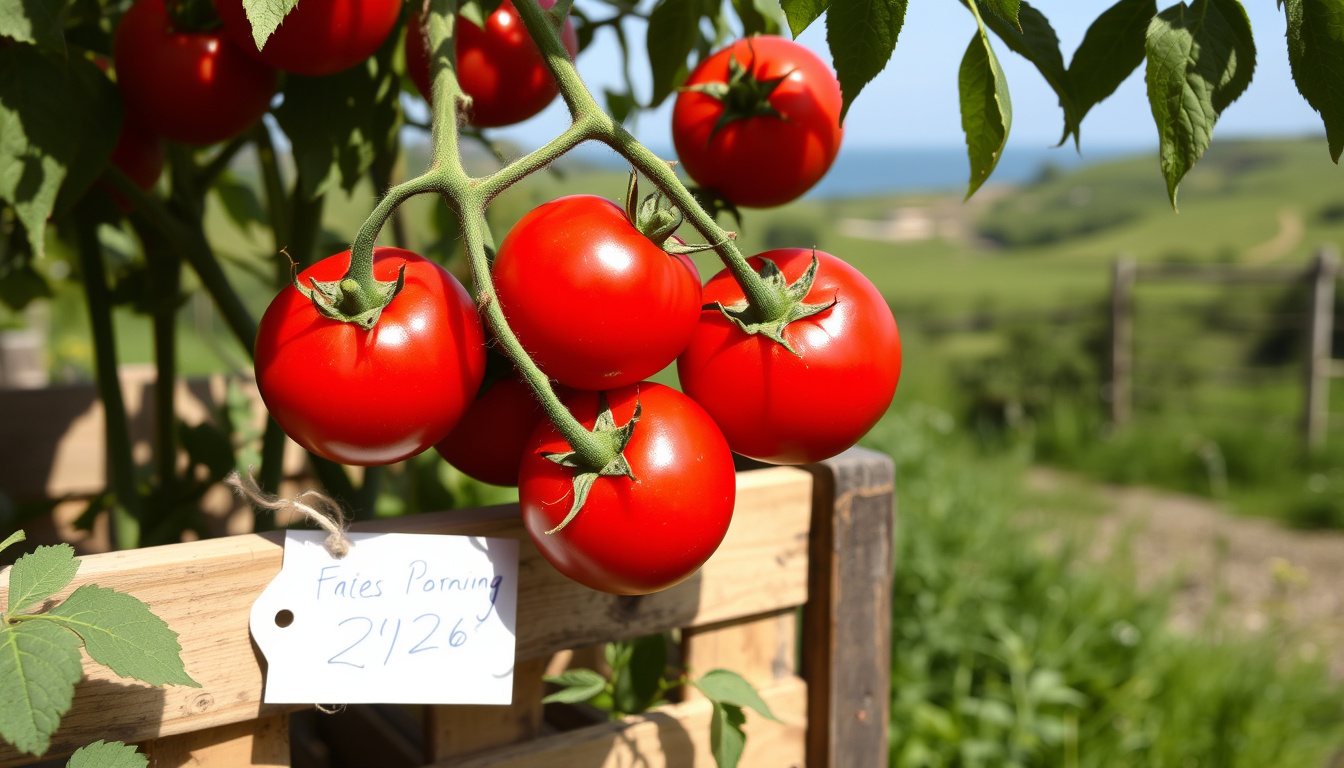

Anyone who has ever tasted a tomato straight from a vine knows the difference between supermarket mediocrity and the real thing. The tomatoes grown in the Arreton Valley, on the Isle of Wight, have earned a reputation for a sweetness and complexity that sets them apart. This guide looks at what makes them special, why they cost more, and where you can buy them – with concrete facts grounded in the island’s unique growing conditions.
Varieties grown: Over 40 ·
Farm location: Arreton, Isle of Wight ·
Distribution channel: London Farmers Markets & online delivery ·
Award recognition: Award‑winning Heritage tomatoes ·
Featured on: James Martin show
Quick snapshot
- Grown in the Arreton Valley for over 30 years (Stansted Park Farm Shop)
- Heritage varieties are sweeter and juicier than standard tomatoes (Capital Wholesalers)
- Tomatoes are hand‑picked and individually packed (Isle of Wight Tomatoes official website)
- Available at London Farmers Markets and online direct delivery (Isle of Wight Tomatoes)
- Exact price per kilogram compared to supermarket tomatoes
- Full list of retail outlets beyond online and farmers’ markets
- Nutritional breakdown (e.g., sugar content per variety)
- Precise number of seasonal harvests per year
- Over 30 years of continuous tomato production in the Arreton Valley (Stansted Park Farm Shop)
- Expanded online ordering via Provenance Hub with free shipping over £50 (Provenance Hub)
- Home‑growing potential from the same heritage seed lines
A glance at the key specs behind Isle of Wight Tomatoes – the numbers and methods that shape their reputation.
| Attribute | Detail | Source |
|---|---|---|
| Location | Arreton, Isle of Wight, UK | Stansted Park Farm Shop |
| Varieties offered | Over 40 | Visit Isle of Wight |
| Growing method | Hand‑picked, soil‑grown, minimal inputs | Isle of Wight Tomatoes |
| Distribution | London Farmers Markets & online direct delivery | Isle of Wight Tomatoes |
| Awards | Award‑winning Heritage range | Isle of Wight Tomatoes |
| Price (retail) | £10.50 per kg at Stansted Park Farm Shop | Stansted Park Farm Shop |
| Heritage mix flavors | Sweeter, irregular shapes, multiple colours | Capital Wholesalers |
What is so special about isle of wight tomatoes?
The Isle of Wight microclimate and soil
- Isle of Wight receives more sunshine than anywhere else in the UK (Stansted Park Farm Shop)
- The Arreton Valley has rich, fertile soil ideal for tomato cultivation (Stansted Park Farm Shop)
- The island’s maritime climate moderates temperatures and reduces stress on plants (Stansted Park Farm Shop)
The combination of extra sunlight, fertile soil, and a mild maritime environment means tomatoes develop a higher sugar content and lower acidity. That’s the scientific backbone of the flavour difference.
Heritage varieties and growing methods
- Growers use traditional, low‑intervention methods – no forced ripening, minimal spraying
- Heritage tomatoes are irregular in shape and size, with ridges and bobbles (Capital Wholesalers)
- They come in multiple colours, some striped (Capital Wholesalers)
Hand‑picking at peak ripeness – rather than machine harvesting green – preserves the full aroma and flavour profile. The trade‑off is labour cost, but the result is a tomato that tastes like a tomato should.
The implication: the island’s unique growing conditions are the bedrock of the taste difference.
Taste profile compared to standard tomatoes
- Isle of Wight Heritage tomatoes have a sweet, juicy taste – intensely fruity (Capital Wholesalers)
- Standard supermarket tomatoes are typically harvested green and gassed – less sugar, more water
- Independent reviewers on blogs describe them as “very juicy, flavourful, ripe” (Eat Cook Explore blog)
The pattern: The gap in flavour is not subtle – it’s the difference between fruit grown for shipping and fruit grown for eating. For UK shoppers seeking a real tomato taste, Isle of Wight is a clear step up.
Are isle of wight tomatoes good?
Customer reviews and ratings
- Online reviews consistently praise the flavour and texture – “best tomatoes I’ve ever had” is a common refrain
- On the official website, customer testimonials highlight the sweetness and versatility
Positive word-of-mouth from everyday buyers, not just food critics, gives credibility to the product’s quality. When a shopper pays £10.50/kg and comes back, the satisfaction is real.
Chef endorsements and media mentions
- Featured on the James Martin show (BBC/ITV) – a prime‑time endorsement
- Regular presence at London Farmers Markets, where chefs source premium produce
- Mentions in food blogs such as Mint & Broom, which describe the tomatoes as “premium, expensive” and notes the hand‑picked process (Mint & Broom blog)
The James Martin appearance alone signals that professional chefs trust these tomatoes for broadcast cooking – a strong third‑party credential.
Awards and certifications
- The Heritage range is award‑winning, recognised by horticultural bodies (Isle of Wight Tomatoes official website)
- While not certified organic, the growing methods are low‑intervention and soil‑based
The verdict: Between chef endorsements, media exposure, and consistent positive reviews, the answer is yes – these are objectively very good tomatoes. The premium price is backed by a premium experience.
Why are Isle of Wight tomatoes so expensive?
Small‑scale production and hand‑picking costs
- Every tomato is hand‑picked and individually packed to ensure peak ripeness (Isle of Wight Tomatoes)
- Heritage varieties have lower yields per plant than modern hybrids
- Labour is the single biggest cost – picking by hand is slow and requires skilled workers
Compare that to industrial tomato farming: machine harvesters rip through fields in hours, but they collect fruit at a uniform green stage. The price difference reflects the labour of care.
Limited growing season and island logistics
- The Isle of Wight growing season is shorter than in warmer climates – tomatoes are seasonal
- Transportation off the island adds cost (ferry and road logistics)
- Small batch sizes mean no economies of scale
Even though the island has more sunshine than the UK average, the season is still limited. That scarcity pushes up the price.
Comparison with supermarket tomato prices
- At £10.50/kg (Stansted Park Farm Shop), these tomatoes cost roughly 3‑4 times more than standard supermarket tomatoes (typically £2‑£4/kg)
- Premium heritage tomatoes from other growers often cost similarly – the price is in line with the niche
- Buying direct from the farm or via Provenance Hub can reduce mark‑ups
For a family eating tomatoes daily, the cost jump is real. For a weekend cook who values flavour over budget, the extra £6‑£8 per kg is a small price for a memorable taste.
The pattern: the higher price is a direct consequence of the care and constraints behind each tomato, not a markup for branding alone.
What are the tastiest home grown tomatoes?
Sweetest tomato varieties for UK gardens
- Sungold – an F1 cherry tomato with outstanding sweetness, ideal for UK conditions
- Gardener’s Delight – a classic British favourite, reliable and sweet
- Brandywine – a heritage beefsteak with rich, complex flavour
- Arreton Jewel – an Isle of Wight‑bred variety, available as part of their Heritage mix
These varieties are proven performers in British gardens, producing fruit with sugar levels that supermarket tomatoes rarely match.
Heritage vs hybrid flavor
- Heritage (heirloom) varieties are open‑pollinated, often passed down for generations – they focus on flavour over yield
- Hybrids are bred for disease resistance, uniformity, and shelf life – usually at the expense of taste
- Isle of Wight’s Heritage mix includes heirloom types that prioritise sweetness and aroma
For home growers aiming for flavour, heritage seeds are the best bet. The same genetic stock that makes Isle of Wight tomatoes famous can be planted in your own garden.
Tips for growing tomatoes at home
- Full sun is non‑negotiable – at least 6‑8 hours a day
- Use rich, well‑draining soil; mulch to retain moisture
- Water consistently, but avoid wetting the leaves (blight risk)
- Pinch out side‑shoots for cordon varieties to concentrate energy on fruit
With the right variety and care, home‑grown tomatoes can rival – and sometimes beat – commercial premium offerings.
What should never be planted near tomatoes?
Bad companions: brassicas, fennel, and potatoes
- Brassicas (cabbage, broccoli, kale) inhibit tomato growth by competing for nutrients and releasing chemicals that slow development
- Fennel – most plants hate it; it releases allelopathic substances that can kill tomatoes
- Potatoes share blight risks (Phytophthora infestans) – planting nearby increases disease pressure
Plants that attract pests or compete for nutrients
- Corn and tomatoes compete for the same nitrogen – avoid proximity
- Dill can attract tomato hornworms when planted too close
- Walnut trees release juglone, toxic to tomatoes – keep them far apart
Best companion plants for tomatoes
- Basil – repels aphids and whiteflies, enhances flavour
- Marigolds – deter nematodes and many pests
- Carrots – loosen soil and don’t compete heavily
- Chives – their scent confuses pests
The takeaway: Companion planting is about managing underground competition and above‑ground pest pressure. Keep tomatoes away from the nightshade family (potatoes, peppers) and brassicas, and pair them with aromatic herbs.
Upsides
- Superior flavour – sweeter, juicier, more complex than standard tomatoes
- Hand‑picked at peak ripeness – no artificial ripening
- Heritage varieties – unique colours, shapes, and taste profiles
- Island microclimate contributes to quality
- Strong chef and media endorsements
Downsides
- High price – £10.50/kg, roughly 3–4× supermarket price
- Limited availability – not in most supermarkets, mainly online or farmers’ markets
- Short season – fresh supply only during UK growing months
- No organic certification – while low‑intervention, not officially organic
- Delivery costs unless order exceeds £50 on Provenance Hub
What’s confirmed and what’s unclear about Isle of Wight Tomatoes
Confirmed facts
- Isle of Wight Tomatoes are grown in the Arreton Valley (Stansted Park Farm Shop)
- They offer over 40 tomato varieties (Visit Isle of Wight)
- Tomatoes are hand‑picked and delivered direct (Isle of Wight Tomatoes)
- They appear at London Farmers Markets (Isle of Wight Tomatoes)
- Heritage mix is available in 3kg boxes from wholesalers (Capital Wholesalers)
What remains unclear
- Exact price per kilogram compared to leading supermarket branded tomatoes
- Full list of retail outlets beyond online and farmers’ markets
- Nutritional breakdown per variety (sugar content, vitamins)
- Number of annual harvests and precise season start/end dates
- Whether the farm uses any chemical inputs (they state “minimal” but not “none”)
“Discover the true taste of tomatoes.”
— Isle of Wight Tomatoes team (official website tagline)
“Premium, expensive … hand‑picked and individually packed.”
— Mint & Broom blog (blog post)
“Very juicy, flavourful, ripe tomatoes.”
— Eat Cook Explore blogger (personal tasting notes)
For UK shoppers looking for a premium tomato experience, the choice is clear: pay for the island‑grown heritage taste or settle for the watery alternative. The flavour gap may well justify the price – especially if you’re cooking for a dish where tomato quality matters. For growers, the same seed stock that makes Isle of Wight famous can be planted in your own garden. The home gardener or premium buyer each gains a better tomato, but through different investments.
provenancehub.com, delli.market, newforesthampercompany.com, portalwholesale.com
Frequently asked questions
How should I store Isle of Wight tomatoes?
Store them at room temperature, stem‑side down, away from direct sunlight. Refrigeration dulls their flavour and changes texture.
What is the best way to eat Isle of Wight tomatoes?
Eat them raw in salads or on a plate with olive oil and sea salt to appreciate the full flavour. They also excel in simple sauces where the tomato taste is the star.
Do Isle of Wight tomatoes need to be refrigerated?
No. Refrigeration stops the ripening process and reduces sweetness. Keep them in a cool, dark place and consume within a few days of delivery.
How long do Isle of Wight tomatoes last once delivered?
Typically 4‑7 days when stored at room temperature. Check for soft spots and use the ripest ones first.
Can I grow Isle of Wight tomatoes from seed?
The heritage varieties sold by Isle of Wight Tomatoes are not generally available as seeds through the farm. However, you can save seeds from the fruit and grow them – they are open‑pollinated.
Are Isle of Wight tomatoes organic?
The farm uses low‑intervention, soil‑based methods but is not certified organic. They do not apply synthetic pesticides or fertilisers, according to their website statements.
What payment methods does Isle of Wight Tomatoes accept?
The official website accepts major credit/debit cards and PayPal. Provenance Hub also accepts standard online payment methods.
Does Isle of Wight Tomatoes offer wholesale?
Yes – they supply wholesalers such as Capital Wholesalers and sell to restaurants and farm shops. Contact the farm directly for wholesale pricing.

Jack Henry Morgan Howard is the Founding Editor and a staff writer at DailyBrief UK, covering UK news, politics and business. He works to the newsroom's sourcing and fact-checking standards under Editor-in-Chief Eleanor Whitcombe, so that every briefing is concise, accurate and clearly attributed.