

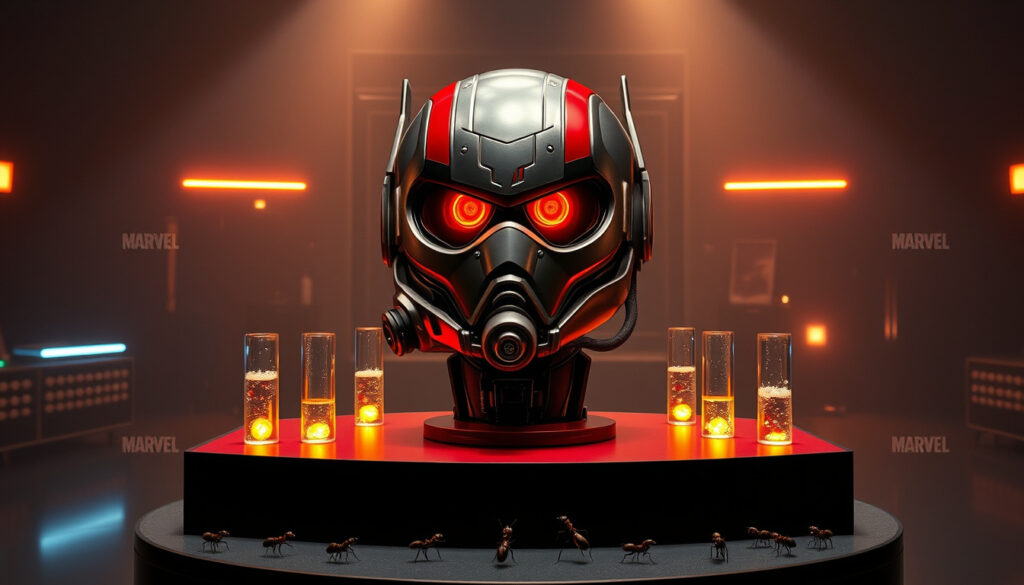
Paul Rudd’s casting as Scott Lang surprised many fans in 2015—his reputation was built on comedies like Anchorman, not superhero epics. Yet the Ant-Man ensemble quietly exceeded expectations, pairing Rudd with Michael Douglas and building a supporting cast that critics would call “especially great.”
Lead Actor: Paul Rudd as Scott Lang · Hank Pym: Michael Douglas · Hope van Dyne: Evangeline Lilly · Villain: Corey Stoll as Darren Cross · Paxton: Bobby Cannavale
Quick snapshot
- Precise billing order across all major databases
- Full details on minor uncredited roles
- Regional dubbing cast variations
- Paul Rudd cast on December 18, 2013 (MCU Fandom Wiki)
- Michael Douglas cast on January 13, 2014 (MCU Fandom Wiki)
- Film released July 17, 2015 (Wikipedia)
- Scott Lang returns in Ant-Man and The Wasp: Quantumania (2023)
- Hope van Dyne takes on full Wasp mantle in sequels
- Original cast core remains central to sub-series
| Role | Actor |
|---|---|
| Director | Peyton Reed |
| Release Year | 2015 |
| Lead Actor | Paul Rudd |
| Key Co-stars | Michael Douglas, Evangeline Lilly, Corey Stoll |
| Villain Actor | Corey Stoll |
Who starred in the first Ant-Man movie?
Five actors anchor the film, with Paul Rudd taking center stage as Scott Lang. The casting choice mattered more than it appeared: Rudd brought comic timing that grounded the fantastical premise, making audiences invest in a character whose entire power set hinges on shrinking to ant-size while retaining human-level strength.
Paul Rudd as Scott Lang
Scott Lang anchors the entire film as the reluctant hero who stumbles into Hank Pym’s technology. A former burglar seeking to go straight, Lang’s criminal past gives him street smarts that complement Pym’s scientific brilliance. According to TV Guide, Rudd’s performance became one of the most praised elements of the film among critics (TV Guide).
Michael Douglas as Hank Pym
The decision to cast Michael Douglas—a two-time Academy Award winner—signaled Marvel’s commitment to legitimacy for this smaller-scale project. Douglas plays Dr. Hank Pym with a weariness that sells the weight of his past failures. Pym created the original Ant-Man technology and spent years regretting that legacy, making Lang’s recruitment both practical and deeply personal (TV Guide).
Evangeline Lilly as Hope van Dyne
Hope van Dyne begins the film as Hank Pym’s conflicted daughter, furious at Scott Lang for his role in her father’s troubles. Unlike the comics, Lilly’s Hope does not become the Wasp in this first installment—Pym refuses to give her the suit. Her arc builds toward transformation, which arrives in the sequel (TV Guide).
Critics praised the supporting cast nearly as much as the leads. The Rotten Tomatoes consensus noted that “Michael Peña is especially great” among the ensemble players working alongside Rudd and Douglas (Rotten Tomatoes Critics Consensus).
Who made a cameo in Ant-Man?
Cameos serve double duty in Ant-Man: they reward longtime Marvel fans while connecting the film to the broader MCU.
Key supporting roles
Anthony Mackie appears briefly as Sam Wilson, the Falcon, setting up cross-references to the Avengers universe that would pay off in later films (TV Guide). Hayley Atwell returns as Peggy Carter, a nod to the Marvel Cinematic Universe’s World War II-era roots (TV Guide). John Slattery plays Howard Stark, father of Tony Stark and a recurring figure from the MCU’s past (TV Guide).
Notable appearances
The most jaw-dropping cameos arrive uncredited in the post-credits sequence. Chris Evans appears briefly as Steve Rogers, Captain America himself (MCU Fandom Wiki). Sebastian Stan follows as Bucky Barnes, the Winter Soldier (MCU Fandom Wiki). These brief appearances reward audiences for staying through the credits.
The two biggest cameos—Chris Evans and Sebastian Stan—appear uncredited. Viewers expecting to see their names in opening credits will miss these entirely, making the post-credits sequence essential viewing for MCU completists.
Stan Lee also appears in his traditional cameo as a bartender, a lighter touch compared to the superhero connections offered by Evans and Stan (MovieMeter full cast list).
Who is the smallest Avenger?
Among the Avengers, Scott Lang holds a unique distinction: he is literally the smallest in physical terms.
Ant-Man role
Scott Lang’s ability to shrink to microscopic levels while maintaining human-level strength makes him literally the smallest member of the Avengers roster. When contracted to ant-size, Lang stands less than a centimeter tall—a scale that no other Avenger approaches. His powers don’t increase his physical stature; they only reduce it.
Size-changing powers
The Pym particles allow Lang to compress his molecular structure at will. His default Ant-Man form appears normal-sized, but deliberate contraction lets him slip through cracks, ride ants, and deliver devastating strikes from impossible angles. The technology works in reverse too: Lang can grow temporarily to giant size, though this is less central to his identity (Marvel.com official movie page).
The implication: physical smallness translates to tactical advantages no other Avenger can match. While Thor summons lightning and Iron Man deploys drones, Ant-Man operates in spaces the others cannot reach.
What powers does the wasp have?
Hope van Dyne inherits the Wasp mantle in the MCU’s evolving mythology, gaining abilities that mirror Ant-Man’s while adding unique advantages.
Hope van Dyne abilities
Hope’s Wasp suit grants the same shrinking and growing abilities as Ant-Man’s, but she demonstrates superior combat instincts from the start. Trained by her father in Hank Pym’s expectations, Hope approaches the technology with scientific understanding Rudd’s character lacks. Her flying capability—using Wasp wings—adds aerial advantages Ant-Man cannot match without his ant companions.
Wasp character
The MCU recontextualized the Wasp from Janet van Dyne (her mother in the comics) to a new character entirely. This allows Hope’s arc to build across multiple films rather than arriving fully formed. Her eventual acceptance of the Wasp identity in Ant-Man and The Wasp (2018) represents one of the trilogy’s most satisfying character developments (TV Guide).
What this means: Hope van Dyne’s powers evolve across the trilogy, starting limited in the first film and reaching full Wasp capability in the sequel. This deliberate character building gives her arc more weight than if she’d simply appeared in full power from the beginning.
Cast of Ant-Man film villain
Darren Cross represents a twisted mirror of Scott Lang: both men received second chances through Pym’s technology, but Cross chose exploitation over redemption.
Darren Cross details
Corey Stoll delivers the film’s primary antagonist with an intensity that grounds Cross’s villainy in recognizable ambition. Cross was Pym’s protégé and former business partner, driven by obsession with replicating the Ant-Man technology independently. His creation of the Yellowjacket suit—stolen through corporate maneuvering—forces the film’s climactic confrontation.
Yellowjacket actor
Stoll’s casting choice proved inspired: his work in House of Cards gave him experience portraying charming men with dangerous ambitions. The role requires him to shift from corporate predator to armored nemesis, a transition the actor handles with physical commitment. Stoll performs the role’s stunt work and fight choreography, adding tangible threat to Yellowjacket’s presence (TV Guide).
The villain works because Cross and Lang share genuine parallels—both men made mistakes and sought second chances. Cross’s fall isn’t due to villainous cliché but to choices the audience can trace logically, making the final confrontation carry emotional weight beyond spectacle.
For audiences invested in the casting decisions, the contrast between Rudd’s everyman charm and Stoll’s controlled intensity defines the film’s central conflict in human terms, not merely technological ones.
Confirmed facts
- Paul Rudd as Scott Lang/Ant-Man
- Michael Douglas as Dr. Hank Pym
- Evangeline Lilly as Hope van Dyne
- Corey Stoll as Darren Cross/Yellowjacket
- Bobby Cannavale as Jim Paxton
- Peyton Reed as director
Unconfirmed details
- Precise billing order across databases
- Full minor supporting cast details
- Regional dubbing information
“Armed with the astonishing ability to shrink in scale but increase in strength, con-man Scott Lang must embrace his inner-hero and help his mentor, Dr. Hank Pym.”
Marvel Studios Official Synopsis (ScreenCrush announcement)
“Paul Rudd is the obvious standout, but the supporting cast delivers too—Michael Douglas and Michael Peña are especially great.”
Rotten Tomatoes Critics Consensus (Rotten Tomatoes)
The ensemble succeeded where the premise seemed vulnerable: a shrinking superhero lacked the visual spectacle of a Thor or Iron Man, so the cast had to carry emotional weight themselves. Rudd’s casting worked precisely because he brought warmth and humor without sacrificing the character’s underlying desperation to be there for his daughter.
Related reading: Cast of Sister Act: Complete List, Roles & Updates · Cast of Fear Street: Prom Queen: Actors and Roles
Paul Rudd charms as Scott Lang/Ant-Man, while the comprehensive actors list spotlights Michael Douglas as Hank Pym and Evangeline Lilly’s Hope van Dyne.
Frequently asked questions
Why did Ant-Man 3 flop?
Ant-Man and The Wasp: Quantumania (2023) underperformed relative to MCU expectations, earning approximately $476 million worldwide against a reported $200+ million budget. The film suffered from tonal inconsistencies, an overstuffed plot, and audience fatigue with MCU quantity over quality—issues unrelated to the original cast’s performances.
Who is the most disliked Avenger?
No official MCU ranking exists, but fan discourse frequently targets characters based on writing choices rather than actor performance. Scott Lang/Ant-Man sometimes faces criticism from fans who prefer the cosmic scale of Guardians or Avengers films over the street-level scope of Ant-Man’s stories.
Who is the quickest Avenger?
Quicksilver (played by Aaron Taylor-Johnson in Avengers: Age of Ultron) holds the speed record among Avengers, capable of running at supersonic speeds. Ant-Man’s shrinking ability creates different tactical advantages, not raw speed.
Why did Chris Evans quit Marvel?
Chris Evans completed his six-film Captain America contract and publicly expressed desire for a break after Avengers: Endgame. He has not ruled out returns but has prioritized other projects, including directing and indie acting roles, rather than signing new multi-film commitments.
What is the biggest flop in film history?
Various analyses cite different films depending on methodology (budget+marketing vs. theatrical return vs. cultural impact). Recent frequently-cited flops include The Adventures of Pluto Nash, John Carter, and Mortal Engines. Ant-Man films have not approached these levels of financial failure.
Who is the villain in the first Ant-Man movie?
Darren Cross, portrayed by Corey Stoll, serves as the main antagonist in Ant-Man (2015). Cross is Hank Pym’s former protégé who develops a competing shrinking-suit technology and becomes the Yellowjacket.
Maya covers culture and lifestyle for DailyBrief — TV, film, streaming and what-to-watch guides. She has written about entertainment for the better part of a decade and keeps our long-running cast lists and series pages current as new seasons and episodes land.