
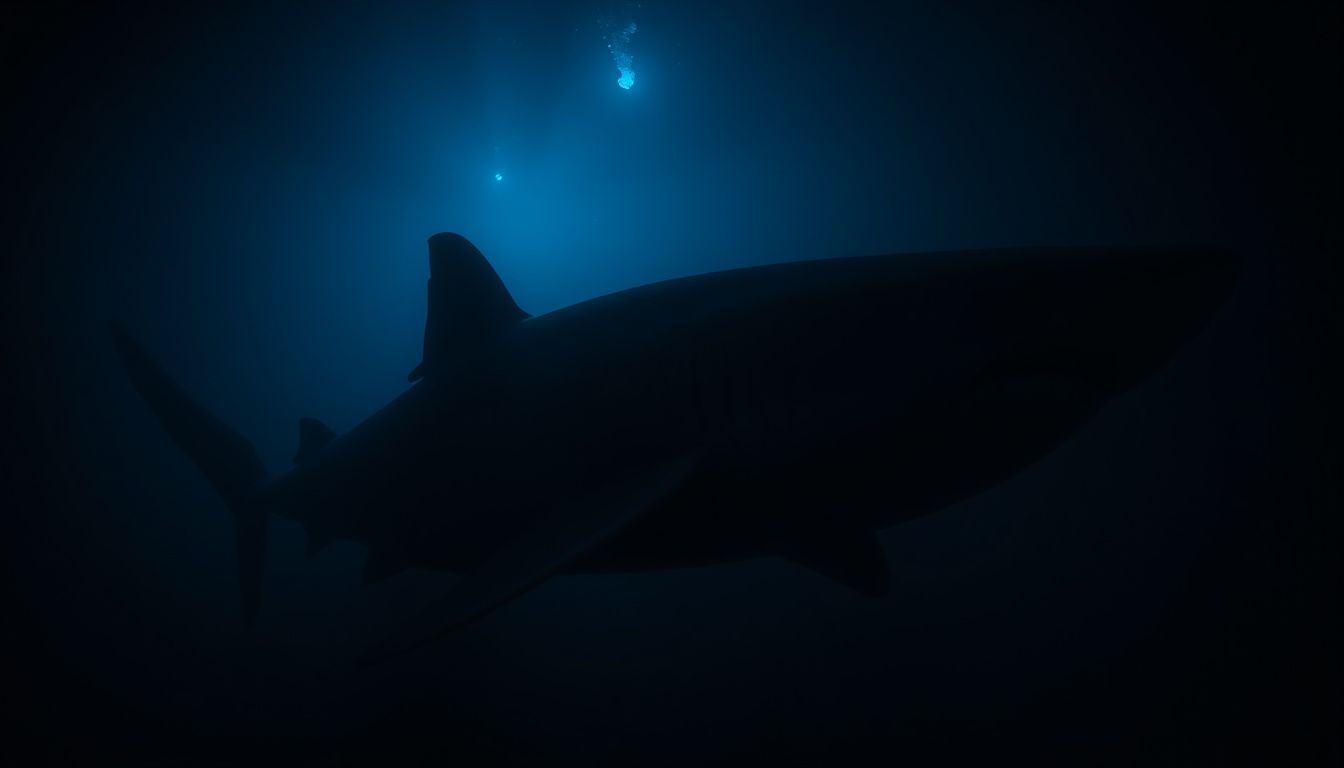

Researchers dropped a cow carcass into the deep waters southeast of Hainan Island expecting to document whale-fall scavengers over days or weeks. Eight Pacific sleeper sharks showed up within hours, revealing aggressive feeding behavior that challenges everything scientists thought they knew about these elusive predators. The footage, captured at 1,629 meters depth, marks the first time these sharks have ever been filmed in the South China Sea.
Observation Depth: 1,629m ·
First Filmed Location: South China Sea ·
Bait Used: Cow carcass ·
Shark Sizes Observed: Varying body sizes ·
Experiment Date: July 2025
Quick snapshot
- Eight sharks visited the carcass within hours of deployment (SPJ)
- All observed sharks were female (Discover Wildlife)
- Sharks yielded positions to newcomers approaching from behind (The Inertia)
- Exact sizes of individual sharks remain uncertain
- Whether the region serves as a nursery ground for females
- Environmental factors driving this southern expansion
- Long-term monitoring could confirm population trends
- Diet studies may reveal specific deep-sea prey species
- Climate impact research on deep-water distributions
Three core facts tie together what researchers discovered: the depth of deployment, the shark count, and the behavioral pattern that emerged.
| Attribute | Value |
|---|---|
| Scientific Name | Somniosus pacificus |
| Habitat Depth | Deep waters, 1,629m observed |
| Recent Study Method | Stationary cameras on cow carcass |
| Location | Southeast of Hainan Island |
| Behavior Noted | Predatory positioning, queue-feeding |
| Study Citation | SPJ (OLAR, 2025) |
Are Pacific sleeper sharks aggressive?
Prior to this experiment, scientists had assumed Pacific sleeper sharks were largely solitary scavengers, content to drift through cold northern waters and opportunistically feed on whatever sinks past them. The South China Sea footage overturns that assumption completely.
Eight sharks arrived at the cow carcass within hours of deployment, and their behavior was anything but passive. Larger sharks over 2.7 meters long aggressively tore at the soft tissue, while smaller individuals circled at the edges, waiting for their turn. The intensity of that feeding—visible in every frame of the recorded footage—suggests these predators are far more competitive than previously documented (Discover Wildlife).
Behavior during feeding
The most striking observation was what researchers call queue-feeding behavior. “Sharks yielded their positions to individuals approaching from behind,” according to the study authors. This hierarchical system mirrors what marine biologists have observed at surface whale carcasses, but at depths exceeding 1,600 meters—environments where such complex social dynamics were considered unlikely (The Inertia).
- Large sharks aggressively tore tissue from the carcass
- Smaller sharks maintained peripheral positions
- Queue priority determined by approach angle, not size alone
“This behaviour suggests that feeding priority is determined by individual competitive intensity, even in deep-water environments, reflecting a survival strategy suitable for non-solitary foraging among Pacific sleeper sharks,” wrote lead researcher Han Tian from Sun Yat-sen University in the published study (Discover Wildlife).
Aggressive group feeding at this depth suggests the South China Sea harbors abundant prey species that can sustain multiple large predators. For marine biologists, this reshapes assumptions about deep-sea food webs in tropical waters.
Comparison to other deep-sea sharks
The behavior contrasts sharply with what researchers have documented in the North Pacific. Off Alaska and the Bering Sea, Pacific sleeper sharks typically hunt individually, targeting fish like pollock, octopus, and occasionally sea lions. The species uses suction feeding with large mouths and slicing lower teeth to handle prey ranging from small teleosts to marine mammals (Alaska Department of Fish and Game).
The South China Sea observation suggests these sharks can adapt their hunting strategies based on local conditions—something researchers hadn’t anticipated from a species considered largely passive in its foraging.
Has a sleeper shark ever attacked a human?
No confirmed attacks by Pacific sleeper sharks on humans have ever been recorded. The species dwells primarily at depths between 200 and 1,500 meters in its traditional range, with occasional vertical migrations to shallower waters for feeding. At a median depth of 184 meters in the NE Pacific, encounters with divers remain rare (Wikipedia).
Related species like the Greenland shark have generated more concern due to their size and opportunistic feeding, but Pacific sleepers lack any documented pattern of targeting mammalian prey—let alone humans.
Recorded incidents
The scientific literature contains no verified accounts of Pacific sleeper shark attacks on divers, submersibles, or submersible-mounted equipment. This absence holds even when considering the species’ diet, which includes larger prey like marine mammals in other regions (Wikipedia).
- Zero confirmed human attacks in recorded history
- Species prefers depths beyond recreational diving range
- Related Greenland shark attacks remain extremely rare
Risk to divers
The practical risk to human observers is essentially nonexistent. The 1,629-meter depth of the South China Sea experiment places these sharks far beyond any conventional diving activity. Even deep-sea submersibles have rarely reported interactions with the species.
The lack of recorded attacks tells only part of the story. These sharks remain among the least-studied large predators on Earth, and their behavior at depth remains poorly understood. Absence of evidence is not evidence of absence.
Are sleeper sharks dangerous?
For swimmers, divers, and anyone unlikely to descend to 1,600 meters, Pacific sleeper sharks pose no meaningful threat. Their deep-water habitat, slow movement patterns, and lack of documented aggression toward humans place them far outside the threat profile of species like great whites or bull sharks.
The real danger—if any—might be to the scientific assumptions we hold about them.
Deep-sea habitat factors
Pacific sleeper sharks glide stealthily through the water column, minimizing noise to surprise prey during ambush attacks (Alaska Department of Fish and Game). Their ability to store large quantities of food in a capacious stomach allows them to survive extended periods when prey is scarce—a critical adaptation for deep-sea survival.
| Factor | Assessment |
|---|---|
| Diving depth range | 200-1,500m typical |
| Human encounter likelihood | Negligible |
| Documented aggression toward humans | Zero confirmed cases |
The implication: human interactions with Pacific sleeper sharks remain purely theoretical rather than practical concerns.
Human encounter likelihood
Unless you’re piloting a research submersible at extreme depths, interactions with Pacific sleeper sharks remain in the realm of theoretical possibility rather than practical concern. The South China Sea experiment required specialized equipment and months of planning—just to catch a glimpse.
Are there great white sharks in the South China Sea?
Great white sharks (Carcharodon carcharias) are primarily cold-water predators, with known populations concentrated off California, Australia, South Africa, and the northeastern United States. Their presence in tropical South China Sea waters remains undocumented and biologically implausible given their thermal preferences.
The sharks documented in this study represent a distinctly different profile—deep-dwelling, cold-adapted species pushed into warmer waters by factors scientists are only beginning to understand.
Shark species in region
The South China Sea supports diverse shark populations, including numerous species adapted to varying depths. However, documented sightings of Pacific sleeper sharks in this region were nonexistent before the July 2025 experiment (Phys.org).
Comparison to sleeper sharks
The key distinction lies in habitat: great whites are epipelagic predators hunting in sunlit surface waters, while Pacific sleepers occupy the bathyal zone—a completely different ecological niche. The depth of 1,629 meters where these sharks were filmed places them in perpetual darkness where surface-oriented predators cannot survive.
For swimmers and beachgoers across Southeast Asia, great white presence remains unlikely. For deep-sea researchers, the discovery of an established Pacific sleeper population changes everything they thought they knew about the region’s marine ecology.
What is the size of Pacific sleeper sharks?
Pacific sleeper sharks rank among the larger shark species globally, though they rarely achieve the maximum lengths of great whites or whale sharks. The species reaches documented lengths exceeding 4 meters in some populations, with some scientific literature suggesting potential sizes up to 7 meters—though such reports remain unverified.
In the South China Sea footage, researchers used a 2.7-meter threshold to distinguish large from small individuals, though this distinction carried no biological significance—it simply helped categorize feeding behavior patterns.
Largest recorded
The largest reliably measured Pacific sleeper shark reached approximately 4.4 meters, though the species clearly has growth potential beyond typical documented sizes. Their slow growth rate and extended lifespans—potentially exceeding 100 years—suggest maximum sizes may never be accurately determined (Wikipedia).
- Verified maximum length: approximately 4.4 meters
- Potential unverified reports up to 7 meters
- Lifespan potentially exceeding 100 years
Sizes in South China Sea footage
Footage from the experiment showed sharks of varying sizes, with larger individuals exceeding 2.7 meters displaying aggressive feeding behavior while smaller sharks circled cautiously at the periphery. External scars visible on one shark’s pectoral fin suggested prior confrontations—evidence that size-based hierarchy influences feeding access (The Inertia).
“The highly aggressive behaviour of sharks observed in the South China Sea suggests that this region still harbours abundant food sources in the deep sea. But what exactly are they? This question is intriguing for both animal distribution and behavioural research,” noted Han Tian in the published study (Discover Wildlife).
Timeline
The discovery of Pacific sleeper sharks in the South China Sea represents a significant expansion of the species’ known range, with implications for both marine biology and ocean conservation.
| Date | Event |
|---|---|
| Pre-2025 | Historical range documented in North Pacific waters from Japan, Bering Sea, Gulf of Alaska to Baja California |
| 2025 | Cow carcass experiment conducted southeast of Hainan Island |
| July 3, 2025 | EurekAlert release on shark detection |
| July 4, 2025 | Discover Wildlife reports cow sinking experiment findings |
| July 8, 2025 | IFLScience covers eight shark visitors to the carcass |
| 2025 | Study published as ‘Predating Behavior of the Pacific Sleeper Shark in the Deep Waters of South China Sea’ in SPJ (SPJ) |
The pattern shows a species historically confined to colder northern waters that now appears established in tropical deep-sea environments—a shift with potentially significant ecological implications.
Confirmed facts vs. what’s still uncertain
Researchers have documented clear evidence of Pacific sleeper shark presence and behavior in the South China Sea, but several critical questions remain unresolved by the available data.
Confirmed
- Eight Pacific sleeper sharks visited cow carcass within hours at 1,629 meters depth (SPJ)
- All observed individuals were female (Discover Wildlife)
- Sharks exhibited queue-feeding behavior with hierarchical priority (PubMed)
- Footage confirms sharks are not strictly solitary (PubMed)
- Sighting represents southernmost known occurrence in Pacific Ocean Basin (Phys.org)
Unclear
- Exact sizes of individual sharks in the footage remain unmeasured
- Whether the region functions as a nursery ground requires additional data
- Environmental factors driving southern expansion
- Frequency and regularity of regional shark occurrences
- Specific prey species sustaining the deep-sea population
Female bias observed in the footage mirrors patterns seen in megamouth sharks, potentially suggesting the South China Sea could serve as a nursery ground—but multiple studies would need to confirm this hypothesis before it moves from speculation to established fact.
Expert perspectives
“This behaviour suggests that feeding priority is determined by individual competitive intensity, even in deep-water environments, reflecting a survival strategy suitable for non-solitary foraging among Pacific sleeper sharks.”
— Han Tian, Researcher at Sun Yat-sen University (Discover Wildlife)
“The highly aggressive behaviour of sharks observed in the South China Sea suggests that this region still harbours abundant food sources in the deep sea. But what exactly are they? This question is intriguing for both animal distribution and behavioural research.”
— Han Tian, Researcher at Sun Yat-sen University (Discover Wildlife)
“Sharks yielded their positions to individuals approaching from behind.”
— Study authors (The Inertia)
The consistency of Han Tian’s observations across multiple quoted passages suggests a research team that carefully documented behavior before drawing conclusions—a hallmark of rigorous deep-sea research.
Related reading: Best Places for Birdwatching: World, Europe & Ireland · Can Dogs Eat Raw Chicken? Risks, Safety Tips & Vet Advice
Frequently asked questions
Can sharks hear people talking?
Sharks possess a lateral line system that detects vibrations in water, along with inner ear structures sensitive to low-frequency sounds. While they cannot hear human speech as we perceive it, they likely detect the vibrations produced by splashing, swimming motions, and underwater equipment. Research suggests sharks are particularly attuned to frequencies between 20 and 300 Hz, which overlaps with some of the sounds produced by distressed swimmers.
What do sharks hear?
Sharks hear best at low frequencies, with sensitivity peaking in the 20-100 Hz range for most species. This makes them particularly responsive to the low-frequency vibrations produced by struggling fish, injured prey, and the beating heartbeats of marine mammals. Their hearing complements their sense of smell and electroreception to create a devastating predator detection system.
What country has the most sharks in the sea?
Australia, Indonesia, and the Philippines rank among the nations with the greatest shark biodiversity, each hosting hundreds of species across diverse habitats. The Indo-Pacific region generally supports the highest concentrations of shark species globally, making waters around these nations particularly significant for marine conservation.
What smell do sharks hate?
Research indicates sharks show aversive responses to certain chemical compounds, including those found in shark-specific repellents derived from dead shark tissue. Some studies suggest that compounds mimicking shark predators or dead conspecifics can deter approach. However, no universally effective shark deterrent exists, and researchers continue studying chemical ecology to develop more reliable repellents.
What shark is most likely to eat you?
Statistically, bull sharks (Carcharhinus leucas), great white sharks (Carcharodon carcharias), and tiger sharks (Galeocerdo cuvier) account for the majority of unprovoked human fatalities worldwide. Bull sharks pose particular danger due to their tolerance for fresh water, allowing them to swim far upstream into rivers and lakes where human contact is more likely.
Do male sharks have willies?
Male sharks possess paired claspers—intromittent organs used during mating that are analogous to mammalian penises but differ anatomically. These structures develop from pelvic fins and are accompanied by calcified support structures called calcaria. Male sharks must insert one clasper into the female’s cloaca during reproduction.
How to differentiate male and female sharks?
Sexually mature male sharks display obvious external claspers alongside their pelvic fins—visible paired structures that females lack. In juveniles and some species, additional morphological markers like size differences or coloration patterns may indicate sex, though external examination of pelvic anatomy provides the most reliable identification.
What are South China Sea sharks?
The South China Sea hosts diverse shark species including whitetip reef sharks, grey reef sharks, bamboo sharks, and increasingly, Pacific sleeper sharks as documented by the July 2025 study. The region’s deep waters support both reef-dwelling species and open-ocean predators adapted to varying depths, though commercial fishing pressure has significantly impacted many local populations in recent decades.

Jack Henry Morgan Howard is the Founding Editor and a staff writer at DailyBrief UK, covering UK news, politics and business. He works to the newsroom's sourcing and fact-checking standards under Editor-in-Chief Eleanor Whitcombe, so that every briefing is concise, accurate and clearly attributed.