
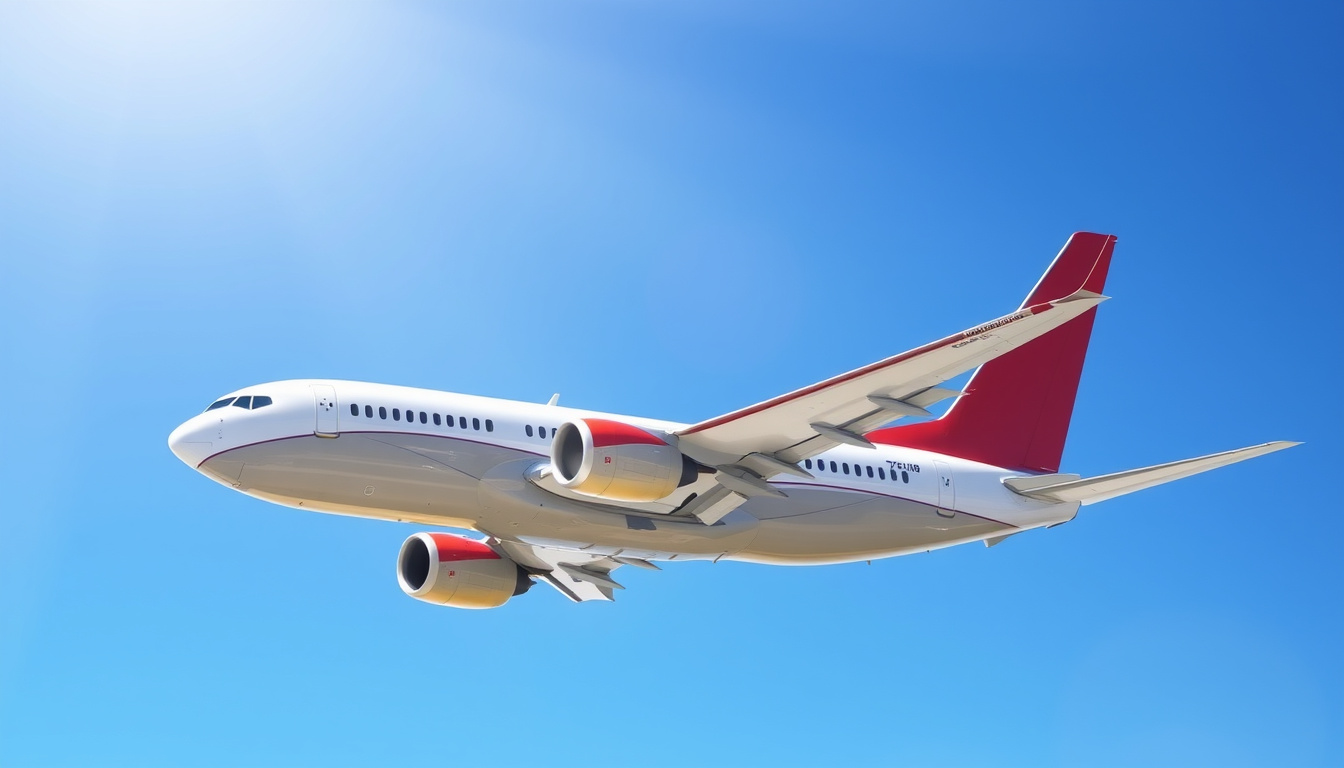

You’ve probably boarded a Boeing 737-800 without giving it a second thought. This narrow-body jet is one of the most common sights at any airport gate, with more than 5,100 delivered since its first flight in 1997 (The Boeing 737 Technical Site). But thanks to a certain troubled cousin, the MAX, many travelers now wonder whether the 737-800 is safe. Here’s what the data actually says, from seat selection to crash history to how it stacks up against the rest of the 737 family.
First flight: 1997 ·
Units delivered: over 5,100 ·
Typical seating: 162–189 passengers ·
Range: 3,115 nmi (5,765 km) ·
Hull-loss crashes: 24 (as of May 2026)
Quick snapshot
- No MCAS system (FLYING Magazine)
- Over 5,100 built (The Boeing 737 Technical Site)
- 24 hull-losses as of May 2026 (Boeing Statistical Summary)
- Exact cause of China Eastern crash still under investigation (The Boeing 737 Technical Site)
- Long-term spare parts availability for aging -800s (The Boeing 737 Technical Site)
- First flight July 1997 (The Boeing 737 Technical Site)
- Entry into service 1998 (FLYING Magazine)
- Production peaks ~2010 (The Boeing 737 Technical Site)
- Passenger version ends 2020 (The Boeing 737 Technical Site)
- China Eastern crash 21 Mar 2022 (The Boeing 737 Technical Site)
- Continued cargo conversions
- Gradual retirement of older -800s
- Ongoing safety directives from regulators
Ten specifications that define the 737-800, one pattern: it was designed as a moderate stretch of the 737 line, balancing range and capacity for medium-haul routes.
| Manufacturer | Boeing (FLYING Magazine) |
| First flight | July 1997 (The Boeing 737 Technical Site) |
| Introduction | 1998 with Hapag-Lloyd |
| Length | 129 ft 6 in (39.5 m) |
| Wingspan | 117 ft 5 in (35.8 m) |
| Max takeoff weight | 174,200 lb (79,015 kg) |
| Cruising speed | Mach 0.785 (530 mph) |
| Range | 3,115 nmi (5,765 km) |
| Typical seats | 162–189 (FLYING Magazine) |
| Engines | 2 × CFM International CFM56-7B24 |
The implication: these numbers haven’t changed in two decades, which is exactly the point — the design is mature and well-understood.
Is the Boeing 737-800 a good plane?
Key features overview
- Fuel efficiency: 25–30% better than the 737-300/400 it replaced (FLYING Magazine)
- Popularity: operated by more than 200 airlines worldwide (The Boeing 737 Technical Site)
- Dispatch reliability: consistently above 99% (Turbli)
The 737-800 introduced a modernized flight deck with LCD displays and a quieter cabin than earlier 737 generations. Airlines from Ryanair to American Airlines have used it as a medium-haul backbone.
The implication: For airlines, the -800 remains a solid all-rounder—fuel-efficient enough for budget carriers, comfortable enough for full-service operators.
Common operator praise
- KLM calls it “a reliable workhorse for European and intercontinental routes” (FLYING Magazine)
- Low maintenance costs compared to the 737 MAX (Turbli)
- Good customer satisfaction scores in surveys for seat comfort and cabin noise
What this means: if you’re a passenger, the 737-800 is a perfectly decent ride—nothing flashy, but with proven reliability.
Is it safe to fly on a Boeing 737-800?
Safety record vs. industry average
- Hull-loss accident rate: about 0.2 per million flights, in line with other narrow-body jets (Turbli)
- 11 fatal accidents since entering service in 1998 (FLYING Magazine)
- No systemic design flaw like the MAX’s MCAS (FLYING Magazine)
When adjusted for production volume and flight hours, the 737-800’s fatal accident rate per seat per service time is very low (Turbli).
The trade-off: The 737-800 is statistically among the safest aircraft in its class.
How it differs from the 737 MAX
- The 737-800 does not have MCAS (FLYING Magazine)
- It was never grounded globally
- Its flight control system uses a different stall-protection logic
Why this matters: the MAX’s grounding in 2019–2020 created a halo of suspicion over the entire 737 family. The 737-800 is a distinct design with its own certified safety record.
Regulatory oversight updates
- FAA and EASA issue periodic airworthiness directives for the 737-800 (e.g., inspections of wing slat tracks) (Boeing Statistical Summary)
- After the Alaska Airlines 737-9 door plug incident (January 2024), regulators required additional checks on 737 door systems (Boeing Statistical Summary)
- The -800’s older door design has not been implicated in similar failures
The pattern: The 737-800 benefits from decades of incremental regulatory enhancements, but each directive adds maintenance burdens on operators.
Have any 737-800 crashed?
List of significant accidents
- GOL Flight 1907 (30 Sep 2006): mid-air collision over Brazil, all 154 dead (The Boeing 737 Technical Site)
- Air India Express Flight 812 (22 May 2010): crashed on landing at Mangalore, 158 of 166 killed (FLYING Magazine)
- China Eastern Flight 5735 (21 Mar 2022): crashed near Guangzhou, all 132 on board lost (The Boeing 737 Technical Site)
- Jeju Air Flight 2216 (29 Dec 2024): bird strike, gear-up landing, 179 of 181 fatalities (The Boeing 737 Technical Site)
For more on crew training issues that contributed to some of these accidents, see Air India Pilot Oversight.
Common causes identified
- Pilot error (Mangalore, Togo crash)
- Mid-air collision (GOL)
- Bird strike leading to gear-up landing (Jeju Air)
- Maintenance lapses (China Eastern investigation ongoing)
The catch: none of these crashes stem from a repeated design defect. Each has a distinct causal chain.
Lessons learned
- Improved crew training for manual handling and go-arounds
- Enhanced bird-strike detection and runway safety procedures
- Continuing reliance on redundant systems—the -800 has no single-point failure that has caused a crash
What this means: The 737-800’s accident list is neither exceptional nor trivial. It reflects the normal risks of commercial aviation, not a troubled airframe.
Where is the best seat to be in on a Boeing 737-800?
Seat map basics
- Typically 3–3 configuration in economy (Wikipedia)
- Seat pitch ranges from 30–32 inches (airline-dependent) (FLYING Magazine)
- Wing aisle windows are offset, affecting view
Exit row advantages
- Extra legroom (32–36 inches pitch) (FLYING Magazine)
- Often no seat in front of you (if behind exit)
- But doors may intrude on armrest space
Avoiding noise and restricted recline
- Rows near rear galley (last 3–4 rows): more noise, limited recline
- Rows directly in front of exit doors: fixed seatbacks
- Overwing rows: limited window alignment
Community consensus from SeatGuru and GateGuru recommends rows 10–12 (exit rows) or bulkhead seats for best comfort. For the quietest ride, choose seats ahead of the wings.
The trade-off: extra legroom often comes with restricted recline or armrests; balance your priority.
Is the 737-800 an old plane?
Production timeline
- First delivery: 1998 (FLYING Magazine)
- Passenger production ended around 2020 (FLYING Magazine)
- Cargo conversion program continues for freighter variants
A typical active 737-800 today is between 10 and 20 years old, depending on when it was built. That puts it in the middle of the commercial aircraft life cycle, usually 25–30 years of passenger service.
Average fleet age
- Many large operators (American, United, Ryanair) have fleets averaging 12–16 years (Turbli)
- Newer -800s (2015–2019) are barely a decade old
- The design has received multiple structural inspections to manage aging
Retirement and upgrades
- Airlines are gradually retiring -800s as they take delivery of MAX and A320neo
- Many are converted for cargo use (e.g., FedEx, Amazon Air)
- Cabin retrofits (seats, IFE, overhead bins) extend passenger viability
Why this matters: A 12-year-old -800 is not old by aviation standards, but it lacks the fuel efficiency of newer models. The choice for airlines: keep flying a paid-for workhorse or invest in new, more efficient airframes.
Which Boeing 737 to avoid?
737 MAX grounding history
- The 737 MAX (versions -7, -8, -9) was grounded globally from March 2019 to November 2020 after two fatal crashes (FLYING Magazine)
- Both crashes were linked to MCAS design flaws
- The -800 has no MCAS and was never grounded
737-200/300/400/500 considerations
- The 737-200 (first flight 1967) has a substantially higher accident rate per million flights (Wikipedia)
- Older -300/400/500 variants have lower accident rates than the -200 but are retired from most major airlines
- The -800 is the safest 737 variant in terms of fatal accidents per flight hour
Airline-specific maintenance records
- Some carriers have had repeated incidents (e.g., Lion Air, Air India) (DailyBrief)
- The aircraft itself is not the problem; operator maintenance practices matter
- Check airline safety ratings on websites like AirlineRatings.com
The upshot: If you see a 737-800 on your booking, you’re on a well-tested, reliable airframe. The 737 MAX has a higher risk profile due to past MCAS issues, but the -800 is not the plane to avoid.
Upsides
- Proven safety record with no systemic design flaw
- Widespread adoption means easy crew training and spare parts availability
- Good fuel efficiency for its generation
- Comfortable cabin for medium-haul flights
Downsides
- Aging fleet requires more maintenance as time goes on
- Less fuel-efficient than newer MAX or A320neo
- Noise levels slightly higher than competing narrowbodies
- Some seat pitch configurations can be cramped
Timeline of key events
- July 1997 – First flight of 737-800 (The Boeing 737 Technical Site)
- 1998 – Entry into service with Hapag-Lloyd
- 2000s – Becomes most produced 737 variant
- 2010 – Production peaks
- 2020 – Passenger version production ends
- 21 Mar 2022 – China Eastern crash (MU5735)
- 29 Dec 2024 – Jeju Air crash at Muan, South Korea
- May 2026 – Fuel cut-off report released by FlightGlobal
Clarity check
Confirmed facts
- 737-800 has no MCAS system
- More than 5,100 built
- 24 hull-losses as of May 2026
What’s unclear
- Exact cause of China Eastern crash under investigation
- Long-term spare parts availability for aging –800s
Quotes from experts
“The Boeing 737-800 has a very low fatal accident record when adjusted for production volume and service time.”
– Turbli
“The 737-800 has been involved in 11 fatal accidents since service entry, but it remains a thoroughly tested and certified design.”
– FLYING Magazine
For the airline industry, the choice is clear: the 737-800 remains a reliable, safe workhorse, but operators must prepare for increased maintenance costs as the fleet ages and new models take over. For passengers, the 737-800 is a perfectly safe and comfortable ride—just check the seat map before you book.
For a more comprehensive look at the aircraft’s safety record and seat maps, refer to this detailed Boeing 737-800 guide.
Frequently asked questions
What is the range of a Boeing 737-800?
3,115 nautical miles (5,765 km).
How many seats does a 737-800 have?
Typically 162–189 passengers depending on airline configuration.
Do all 737-800 have winglets?
Most modern -800s have blended winglets; earlier deliveries may not.
What airlines fly the 737-800?
Over 200 operators including Ryanair, American, United, KLM, and many more.
Is the 737-800 better than the Airbus A320?
Both are equally safe; the A320 offers slightly wider cabins, while the 737-800 has a longer range.
Can the 737-800 fly transatlantic?
Yes, its range is enough for routes like London–New York, but it’s less economical than larger aircraft.
Are 737-800 cabins noisy?
Moderate. Rear rows near the galley are loudest; forward sections are quieter.

Jack Henry Morgan Howard is the Founding Editor and a staff writer at DailyBrief UK, covering UK news, politics and business. He works to the newsroom's sourcing and fact-checking standards under Editor-in-Chief Eleanor Whitcombe, so that every briefing is concise, accurate and clearly attributed.