
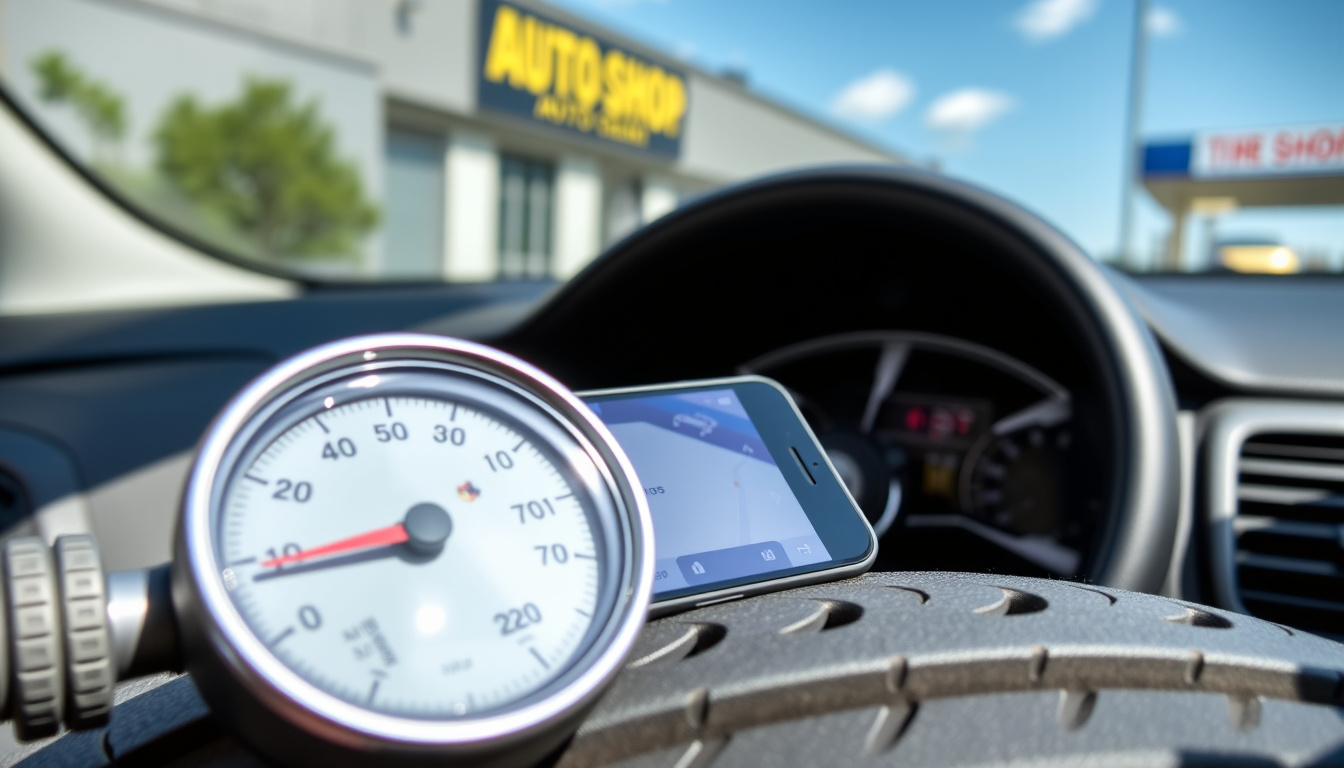

Few things make a driver’s stomach drop like seeing a flat tire or feeling the wheel wobble at speed. If you’re searching “tire shop near me,” you probably need a replacement, a pressure check, or just straight answers on what the law requires. This guide covers the real costs of new tires in Ireland, the 3% pressure rule, and exactly when a tire becomes illegal—so you know what to expect before you pull into the shop.
Average tire replacement cost (per tire): $100–$300 (fitted) · Legal minimum tread depth (UK/EU): 1.6 mm · Recommended tire pressure (typical car): 30–35 PSI · Number of tires on a standard car: 4 · 3% tire rule pressure drop per 10°F: True (physics principle)
Quick snapshot
- Use filters for open now, 24‑hour, mobile service (ODO.ie Guide to Tyre Shops)
- Check reviews and ratings on Yelp or Google Maps (ODO.ie Guide to Tyre Shops)
- Look for fast‑fit chains like First Stop, Modern Tyres (ODO.ie Guide to Tyre Shops)
- Budget tires start at $60 per tire (AIG Ireland Tyre Pricing Guide)
- Mid‑range $100–$200 per tire fitted (AIG Ireland Tyre Pricing Guide)
- Premium brands cost $200+ each (AIG Ireland Tyre Pricing Guide)
- Tread depth must be above 1.6 mm (ODO.ie Legal Requirements)
- Check pressure monthly with the 3% rule (ODO.ie Legal Requirements)
- Tire age matters—replace every 6–10 years (ODO.ie Legal Requirements)
- Mobile tire fitting services available across Ireland (24hr Tyres Guide)
- New EU tire labeling regulations affect 2025 models (24hr Tyres Guide)
- Budget tire recommendations updated by Eden Tyres & Servicing (24hr Tyres Guide)
The pattern across Irish tire shops: you pay for more than just rubber. Fitting and disposal add 15–25% to the sticker price.
| Label | Value |
|---|---|
| Average new tire cost (fitted) | $100–$300 |
| Legal minimum tread depth (Ireland/UK) | 1.6 mm |
| Typical car tire pressure | 30–35 PSI |
| Tire lifespan (average) | 6–10 years or 40,000–60,000 miles |
| 3% rule | Pressure drops 3% for every 10°F temperature drop |
How much does replacing a tire cost?
Five price tiers, one pattern: the tire itself is half the story—fitting and disposal fees add 15–25% to the total. In Ireland, the actual cost depends on tire type, brand, and where you buy.
Budget tire cost range 2025
- Budget tyres: €60–€80 per tyre plus €15–€20 fitting and balance (AIG Ireland Tyre Pricing)
- General range: €60–€250+ per tyre depending on size and brand (ODO.ie Cost Overview)
Mid-range vs premium tire pricing
- Mid-range: €90–€120 per tyre, fitting €15–€20
- Premium: €130–€180 per tyre, fitting €15–€20
- Run-flat: €160–€220 per tyre, fitting €20–€25
Fitting and disposal fees explained
- Fitting and balancing typically €15–€25 per tyre in Ireland
- Disposal fees for old tyres: €2–€5 each at most garages
- Halfords pricing varies by location and promotion—call ahead for a quote
The implication: for a typical Irish family car, replacing all four tires with mid-range rubber costs about €420–€560 fitted. That’s the real “tire shop near me” budget.
Budget tires save you €40–€60 per corner today, but wear 20–30% faster. A Dublin commuter spending €250 on four budget tires may pay more per kilometer than someone buying mid-range at €400.
What is the 3% tire rule?
One physics principle, one consequence: tire pressure drops roughly 3% for every 10°F (about 5.5°C) drop in ambient temperature. That means a cold snap in January can leave you driving on under-inflated tires without touching the valve.
Why tire pressure changes with temperature
- Air contracts in cold weather, reducing internal pressure
- A 20°F drop = approximately 6% pressure loss—2 PSI on a 35 PSI tire
- Under-inflation reduces fuel economy by 0.2% for every 1 PSI drop across all four tires (ODO.ie Pressure Guidelines)
How to adjust for seasonal shifts
- Check pressure monthly and before long journeys
- Check when tires are cold—before driving or at least 3 hours after last trip
- Inflate to manufacturer spec (usually on door jamb sticker or inside fuel flap)
Why this matters: the RSA and every major tire safety body recommend replacing tires at 3 mm tread depth, not the legal minimum of 1.6 mm. Wet-weather braking distance increases 30–50% between 3 mm and 1.6 mm (ODO.ie Safety Data).
Is 40 psi too high for tires?
This is the most Googled tire pressure question in Ireland—and the answer depends on your car, not a universal number.
Recommended PSI for sedans and SUVs
- Typical passenger car: 30–35 PSI (check owner’s manual)
- Many SUVs and vans: 36–42 PSI for rear tires when loaded
- 40 PSI is safe for many cars but check owner manual—not automatically too high
Risks of over-inflation
- Reduced traction: less rubber contacts the road
- Center tread wear accelerates: tires wear out faster in the middle
- Harsher ride: bumps feel sharper, cabin noise increases
- Risk of blowout on potholes: over-inflated tires have less give
The catch: driving with 42 PSI in a car specified for 32 PSI means a harder ride, worse grip in Irish wet conditions, and uneven wear. You’ll replace tires sooner—and pay more in the long run.
Is 42 PSI too high to drive? For a car specified at 32 PSI—yes. You’re 31% over spec. That translates to roughly 15% less contact patch on wet roads. For a loaded van rated at 44 PSI? 42 is fine.
How do I check my tire pressure?
Checking pressure takes 2 minutes, costs nothing, and is the single best preventive maintenance you can do for your car.
Step-by-step pressure check
- Buy a reliable tire gauge (digital or dial—€5–€15 at any motor factor)
- Check when tires are cold—before driving or 3+ hours after last trip
- Remove valve cap, press gauge firmly onto valve stem
- Read the pressure and compare to manufacturer spec (door jamb sticker)
- Add air if needed; re-check with gauge
- Replace valve cap—prevents dirt and slow leaks
Finding the correct PSI for your vehicle
- Look on the driver’s door jamb—a sticker lists front and rear pressures
- Check inside the fuel filler flap if not on door jamb
- Owner’s manual always lists manufacturer spec
- Never use the max pressure printed on the tire sidewall—that’s the tire’s limit, not the car’s spec
The pattern: most Irish drivers rely on garage air pumps that may be inaccurate. Invest €10 in a digital gauge and you’ll never second-guess your pressure again (ODO.ie Pressure Check Advice).
What are the best budget tires in 2025?
Budget tires aren’t bad—but they’re a compromise. Here’s what you should know before buying.
Top budget tire brands
- LingLong, Triangle, and Westlake: Chinese brands widely available in Ireland
- Nexen and Hankook: Korean brands that straddle budget and mid-range
- Kumho: reliable budget option with decent wet grip
- Eden Tyres & Servicing lists several models with customer reviews
Trade-offs: price vs longevity
- Budget tires cost €60–€120 each
- Last 30,000–40,000 km versus 50,000–70,000 km for premium
- Wet braking distance: budget tires stop 3–5 meters longer at 80 km/h
- Road noise: budget tires are noticeably louder
Where to buy budget tires in Ireland
- Modern Tyres, First Stop, and Halfords stock budget ranges
- Online retailers like Oponeo deliver to Irish fitting centers
- Look for EU tire label ratings—A for wet grip, B for fuel efficiency is ideal
The trade-off: budget tires save €40–€80 per set but wear out 40% faster. Over 60,000 km, the mid-range set often costs less per kilometer.
Used tires—cheap and tempting. But any tire over 6 years old, or with repairs near the sidewall, is a gamble. Stick to new budget tires from a known dealer, not a “good condition” used set from Facebook Marketplace.
When is a tire illegal in Ireland?
Irish law is clear on tire minimums—but the RSA and safety bodies recommend far higher standards for wet-weather driving.
Legal tread depth requirement
- Minimum 1.6 mm across the central three-quarters of the tyre around the full circumference (ODO.ie Legal Requirements)
- All modern tyres have tread wear indicator bars set at 1.6 mm—if the bar is flush with the tread, the tyre is illegal
- The 20¢ coin trick: if the outer gold band is fully visible when inserted into a tread groove, replace immediately
Tire age and visible damage
- Tyres over 10 years old are often advised against regardless of tread depth
- Sidewall cracks, bulges, or cuts deeper than the rubber surface = failure at NCT
- Uneven wear (one edge more worn = tracking issue) can also fail test
Penalties for illegal tires
- Fixed charge penalty: €80–€120 on-the-spot fine (24hr Tyres Penalty Guide)
- If unpaid within 28 days: increases to €180+
- NCT failure for dangerous tyres requires re-test (€55 for partial, €85 for full)
The pattern: the RSA recommends 3 mm replacement, the law says 1.6 mm—the gap is where accidents happen. Wet-weather braking distance increases 30–50% between those two numbers.
“All modern tyres have tread wear indicator bars set 1.6 mm deep within the tread grooves. When the tread is worn flush with these bars, the tyre is at the legal limit and must be replaced for safety.”
— TyreSafe (UK Tyre Safety Organisation), via ODO.ie Guide
“Check your tyre pressure at least once a month and before long trips. Under-inflated tyres wear faster, reduce fuel economy, and increase stopping distances—especially on wet roads.”
— RACV (Australian Motoring Authority), pressure check guidelines
“The 105% rule is specific to cycling: it means your tire pressure should be 105% of what you expect—cycling tires are over-inflated for efficiency. This does not apply to car tires.”
— SILCA (Premium Cycling Equipment Manufacturer), rule explanation
For Irish drivers, the choice is clear: check your pressure monthly, replace at 3 mm, and budget €400–€560 for four mid-range tires fitted. Anything less is a gamble on safety—and the fines are the least of it.
coverinaclick.ie, bpdrivingschool.com, michelin.ie, shoesformycar.ie, kennco.ie
Frequently asked questions
Can I drive with a tire pressure of 40 psi?
Yes, for many cars 40 PSI is safe—but check your owner’s manual or door jamb sticker. If the spec says 32 PSI, driving at 40 PSI means reduced traction and center tread wear. If you’re loaded with luggage or towing, 40 PSI on rear tires may be fine. Always stick to manufacturer spec.
What is the difference between budget and premium tires?
Budget tires (€60–€120) use harder rubber compounds that wear faster (30,000–40,000 km vs 50,000–70,000 km for premium). They also have longer wet braking distances and higher road noise. Premium tires (€130–€250) offer better grip, fuel efficiency, and comfort. For low-mileage city cars, budget is fine. For motorway driving in Irish rain, premium is safer.
How long do budget tires last?
Budget tires typically last 30,000–40,000 km, compared to 50,000–70,000 km for premium tires. The harder rubber wears faster but also means lower rolling resistance. If you drive less than 10,000 km/year, budget tires can last 3–4 years. Check tread depth annually with a gauge to stay safe.
Do I need to replace all four tires at once?
The safest practice is to replace all four at once for even handling. If budget is tight, replace in pairs (same axle) with identical make and model. Never put two new tires on the front and two worn tires on the rear—that increases oversteer risk in wet conditions.
Is it safe to buy used tires?
Generally not recommended. Used tires may have internal damage, repairs near the sidewall, or age beyond safe limits. Any tire over 6 years old should be inspected by a professional. Stick to new budget tires from a known dealer—they cost less than a used tire’s hidden repair bill.
Where can I get a mobile tire fitting service in Ireland?
Several companies offer mobile tire fitting across Ireland: 24hr Tyres, TyresOnTheDrive, and local independent services. Mobile fitting costs €20–€40 extra but saves you a trip to the shop. Check that the mobile service carries your tire size before booking. Some services operate 24 hours for emergencies.
What does the 105% rule mean for car tires?
The 105% rule is specific to cycling tire pressure—it means inflating to 105% of the expected pressure for aerodynamics. This does not apply to car tires. For cars, always use the manufacturer spec printed on the door jamb or fuel filler flap. Ignore 105% rule advice for your vehicle—it’s for bikes.
Related on DailyBrief
- Cast of Coronation Street: Current, New & Former Actors (2025)
- Cast of Outer Banks: Complete List of Actors by Season
- Richest Woman in the World 2026: Alice Walton Tops List
- Pixel 10 Pro XL Review: Size, Price, Battery Life & Worth Buying
More from Blog on DailyBrief.

Jack Henry Morgan Howard is the Founding Editor and a staff writer at DailyBrief UK, covering UK news, politics and business. He works to the newsroom's sourcing and fact-checking standards under Editor-in-Chief Eleanor Whitcombe, so that every briefing is concise, accurate and clearly attributed.