
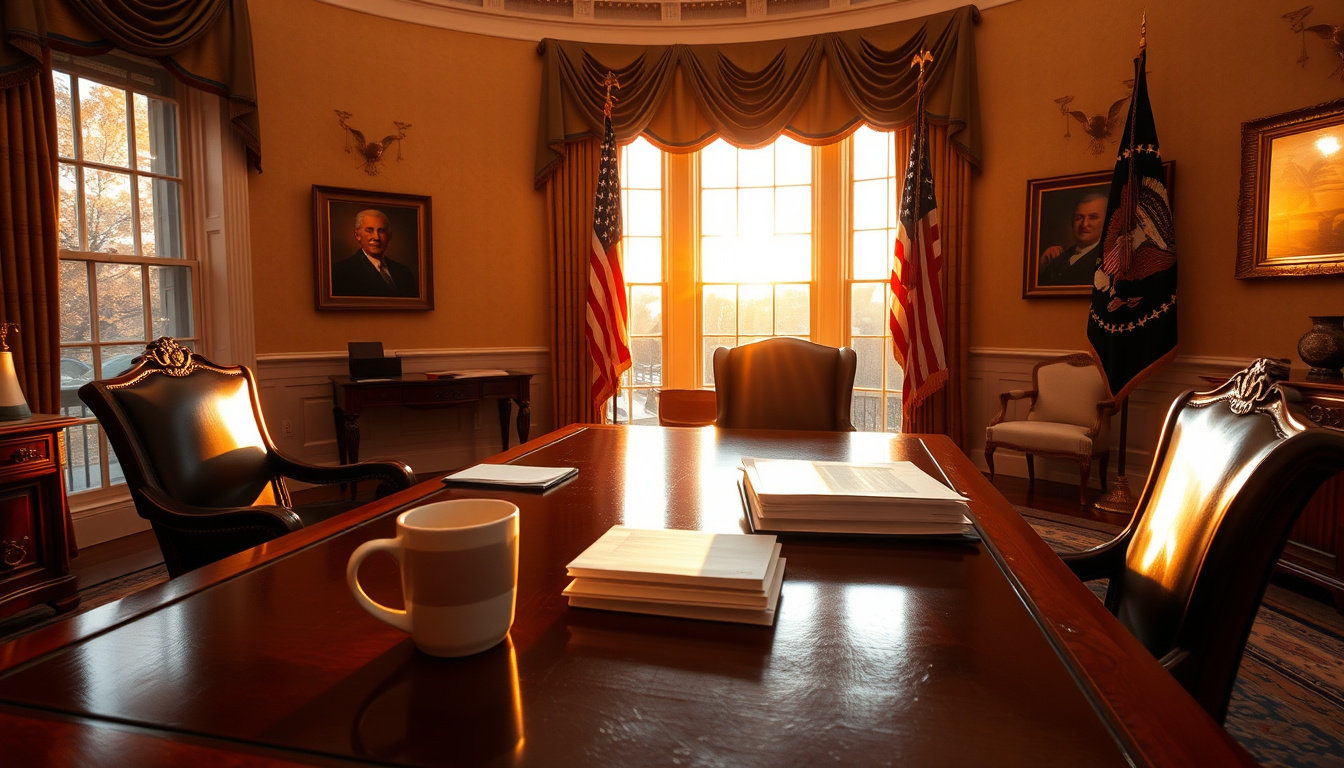
It’s hard to think of a president who arrived in the White House with a more unlikely resume — Hollywood actor, corporate pitchman, governor of a state that often defies easy labels. Yet Ronald Reagan didn’t just become the 40th president; he reshaped the Republican Party, accelerated the end of the Cold War, and left a legacy that Americans still argue about over dinner tables. Here’s a fact-grounded look at the man, the myth, and the moments that defined him.
Presidency: 40th President (1981–1989) ·
Birth: February 6, 1911 ·
Death: June 5, 2004 ·
Assassination Attempt: Survived gunshot wound on March 30, 1981 ·
Electoral Victory: Won 49 of 50 states in 1984 re-election
Quick snapshot
- 40th President of the United States (The White House (official presidential library))
- Survived an assassination attempt on March 30, 1981 (Ronald Reagan Presidential Library (primary source archive))
- Diagnosed with Alzheimer’s disease in 1994 (The New York Times (leading newspaper))
- The extent of Reagan’s personal knowledge of illegal activities in the Iran-Contra affair remains debated (Encyclopaedia Britannica (reference publisher))
- Some conspiracy theories suggest a second shooter in the assassination attempt, but these lack credible evidence (Ronald Reagan Presidential Library (primary source archive))
- March 30, 1981: Shot by John Hinckley Jr. outside Washington Hilton (Ronald Reagan Presidential Library (primary source archive))
- June 5, 2004: Dies of pneumonia complicated by Alzheimer’s at age 93 (The White House (official presidential library))
- Reagan’s economic policies (Reaganomics) continue to influence tax and deregulation debates (Encyclopaedia Britannica (reference publisher))
- The Reagan Library in Simi Valley remains a major site for historical research and public events (Ronald Reagan Presidential Library (primary source archive))
Here are the key facts in tabular form.
| Attribute | Detail |
|---|---|
| Full Name | Ronald Wilson Reagan |
| Born | February 6, 1911, Tampico, Illinois |
| Died | June 5, 2004, Los Angeles, California |
| Spouses | Jane Wyman (m. 1940; div. 1949), Nancy Reagan (m. 1952) |
| Children | Maureen, Michael, Patti, Ron |
| Political Party | Republican |
| Presidency | 40th President (1981–1989) |
What was Ronald Reagan famous for?
Before he was president, Reagan was a radio sports announcer and then a Hollywood actor who appeared in more than 50 films, including Kings Row and Bedtime for Bonzo. He served as president of the Screen Actors Guild and later as governor of California from 1967 to 1975, shifting from a Democrat to a Republican along the way (Encyclopaedia Britannica (reference publisher)).
Reagan is most famous for leading the conservative movement, implementing sweeping tax cuts and deregulation known as Reaganomics, and for his aggressive Cold War posture. In a 1987 speech at the Brandenburg Gate, he directly challenged Soviet leader Mikhail Gorbachev: “Mr. Gorbachev, tear down this wall!” (Ronald Reagan Presidential Library (primary source archive)). Many historians credit his tough stance — and his rapport with Gorbachev — with helping to end the Cold War (Encyclopaedia Britannica (reference publisher)).
What was Reagan’s golden rule?
Reagan often paraphrased a version of the Golden Rule in his political philosophy: “Treat people the way you want to be treated.” He applied this to his view of limited government — believing that if you wouldn’t want someone telling you what to do, you shouldn’t impose that on others (The New York Times (leading newspaper)).
Which President fathered a child at 70?
This is a frequent trivia question around Reagan, but the answer is not Reagan; it’s John Tyler, the 10th president, who fathered a child at age 70. Reagan’s youngest child, Ron, was born when Reagan was 47, and his other children came earlier (The White House (official presidential library)).
The implication: Reagan’s age as president (69 at inauguration) often leads to mistaken assumptions about his fatherhood timeline.
The “golden rule” question reveals how Reagan’s personal ethics were used to sell conservative policies — a framing that helped him connect with voters beyond typical party lines.
Why was Ronald Reagan so popular?
Reagan earned the nickname “The Great Communicator” for his ability to deliver optimistic, plainspoken messages that restored national confidence after the malaise of the 1970s (Encyclopaedia Britannica (reference publisher)). In his first inaugural address he declared, “Government is not the solution to our problem; government is the problem.” That one line resonated with millions who felt overburdened by taxes and bureaucracy.
His economic policies — cutting top income tax rates from 70% to 28% and slashing regulations — appealed to voters who wanted to “get government off their backs” (The White House (official presidential library)). The 1984 election was a landslide: he carried 49 of 50 states, losing only Minnesota and the District of Columbia (Encyclopaedia Britannica (reference publisher)).
His survival of the 1981 assassination attempt also boosted his popularity. When he joked to surgeons at George Washington University Hospital — “I hope you’re all Republicans” — the public saw a man of unshakeable good humor under fire (Ronald Reagan Presidential Library (primary source archive)).
For all his popularity, Reagan left office with a divided legacy: his tax cuts spurred economic growth but also ballooned the national debt, a trade-off that still fuels debate today.
The pattern: Reagan’s charm and resilience turned personal moments into political capital, insulating him from criticism that would have damaged other leaders.
What was Ronald Reagan’s nickname as president?
The most enduring nickname is “The Great Communicator,” a testament to his oratorical skill and ability to connect with everyday Americans. A second nickname, “The Teflon President,” was coined by Democratic Representative Pat Schroeder to describe how scandals — especially the Iran-Contra affair — seemed to slide off Reagan without damaging his reputation (The New York Times (leading newspaper)).
Within the Reagan family, his wife Nancy called him “Ronnie,” and even in formal settings, the press often shortened it to “The Gipper,” after his role as George Gipp in the film Knute Rockne, All American (Encyclopaedia Britannica (reference publisher)).
Why did Ronald Reagan get assassinated?
On March 30, 1981, just 69 days into his presidency, Reagan was shot outside the Washington Hilton Hotel by John Hinckley Jr., a 25-year-old drifter who had become obsessed with actress Jodie Foster (Ronald Reagan Presidential Library (primary source archive)). Hinckley fired six shots with a .22-caliber revolver. One bullet ricocheted off the presidential limousine and entered under Reagan’s left armpit, lodging an inch from his heart (JAMA (peer-reviewed medical journal)).
Reagan was rushed to George Washington University Hospital, where he underwent emergency exploratory surgery. He later quipped to his wife, “Honey, I forgot to duck” (Ronald Reagan Presidential Library (primary source archive)). The attack also wounded Press Secretary James Brady, Secret Service Agent Timothy McCarthy, and D.C. police officer Thomas Delahanty. Brady’s death in 2014 was ruled a homicide directly linked to the gunshot wound (U.S. Department of Justice (federal law enforcement agency)).
Hinckley was found not guilty by reason of insanity and confined to a psychiatric facility. He was released in 2016 after a federal judge determined he no longer posed a danger (Encyclopaedia Britannica (reference publisher)).
What was the cause of Ronald Reagan’s death?
Reagan died on June 5, 2004, at his home in Los Angeles at age 93. The official cause of death was pneumonia, with Alzheimer’s disease listed as a contributing condition (The White House (official presidential library)). He had publicly disclosed his Alzheimer’s diagnosis in a handwritten letter to the American people in November 1994, writing: “I now begin the journey that will lead me into the sunset of my life” (The New York Times (leading newspaper)).
Who was President for 45 minutes?
After the assassination attempt, Secretary of State Alexander Haig famously said, “I am in control here,” a remark that caused confusion because the Constitution places the Vice President (not the Secretary of State) next in line. In fact, Vice President George H.W. Bush was in the air and assumed command as soon as he returned to Washington. The idea of a “45-minute presidency” is a myth — no one served as president for 45 minutes (Ronald Reagan Presidential Library (primary source archive)).
The “45-minute president” story persists because it captures a moment of constitutional ambiguity — but it’s a neat fiction, not fact. The actual line of succession was never triggered.
What was the cause of Ronald Reagan’s death?
As noted above, Reagan died from pneumonia complicated by Alzheimer’s disease on June 5, 2004. He spent the last decade of his life in a slow decline, cared for by his wife Nancy. His state funeral included a national day of mourning and a formal service at the Washington National Cathedral (Encyclopaedia Britannica (reference publisher)).
What two presidents died on the same day?
This question often comes up alongside Reagan trivia, but it refers to John Adams and Thomas Jefferson, who both died on July 4, 1826 — exactly 50 years after the signing of the Declaration of Independence. Reagan did not share a death date with any other president (The White House (official presidential library)).
The pattern: Reagan’s death joins a small set of presidential deaths that became national moments of reflection, though his was not paired with another founding father’s.
Did Donald Trump ever meet Ronald Reagan?
Yes. Donald Trump met Ronald Reagan at a White House event in 1986, when Trump was a prominent real estate developer. Trump later attended Reagan’s funeral in 2004 (The New York Times (leading newspaper)). Trump has frequently cited Reagan as an inspiration, particularly for his communication style and tax-cutting agenda. The meeting, however, was brief — a handshake and photo — and Trump was not a political figure at the time (Encyclopaedia Britannica (reference publisher)).
The pattern: Trump’s brief encounter with Reagan became a touchstone for later comparisons between the two Republican figures.
Timeline of Ronald Reagan’s life
- February 6, 1911 — Born in Tampico, Illinois
- 1937–1960s — Hollywood acting career
- 1967–1975 — Governor of California
- November 4, 1980 — Elected President
- March 30, 1981 — Survives assassination attempt
- 1984 — Re-elected with 49 states
- 1989 — Leaves office
- 1994 — Diagnosed with Alzheimer’s disease
- June 5, 2004 — Dies of pneumonia complicated by Alzheimer’s
Confirmed facts
- Reagan was shot by John Hinckley Jr. on March 30, 1981 (Ronald Reagan Presidential Library (primary source archive))
- Hinckley’s motive was his obsession with actress Jodie Foster (Encyclopaedia Britannica (reference publisher))
- Reagan died of pneumonia due to Alzheimer’s disease on June 5, 2004 (The White House (official presidential library))
What’s unclear
- The extent of Reagan’s personal knowledge of illegal activities in the Iran-Contra affair remains debated (Encyclopaedia Britannica (reference publisher))
- Some conspiracy theories suggest a second shooter in the assassination attempt, but these lack credible evidence (Ronald Reagan Presidential Library (primary source archive))
Key quotes from Ronald Reagan
“Mr. Gorbachev, tear down this wall!”
— Ronald Reagan, speech at the Brandenburg Gate, Berlin, June 12, 1987 (Ronald Reagan Presidential Library (primary source archive))
“Government is not the solution to our problem; government is the problem.”
— Ronald Reagan, First Inaugural Address, January 20, 1981 (The White House (official presidential library))
Reagan’s legacy is both adored and contested. For conservatives, he restored American confidence and set a fiscal direction that defined the party for decades. For critics, his tax cuts widened inequality and his administration’s Iran-Contra actions undermined democratic oversight. The paradox endures: a Hollywood actor who became a transformative president, beloved by millions, yet whose policies still fuel partisan debates.
That paradox means Reagan remains a figure who forces Americans to reckon with trade-offs — charisma versus accountability, tax cuts versus deficits, strength versus secrecy.
Ronald Reagan also used his presidential authority to establish National Ice Cream Day in 1984.
Frequently asked questions
What were Ronald Reagan’s major accomplishments as president?
He implemented major tax cuts (Reaganomics), pursued deregulation, escalated the Cold War to help end it, and appointed three Supreme Court justices (Sandra Day O’Connor, Antonin Scalia, Anthony Kennedy). His 1987 Brandenburg Gate speech became iconic (Encyclopaedia Britannica (reference publisher)).
How old was Ronald Reagan when he became president?
He was 69 years old when inaugurated on January 20, 1981, making him the oldest president at the time of taking office (The White House (official presidential library)).
What was Reagan’s economic policy?
Reaganomics combined across-the-board tax cuts (the top rate fell from 70% to 28%), reduced social spending, and deregulated industries. The goal was to stimulate economic growth by increasing supply (Encyclopaedia Britannica (reference publisher)).
Who succeeded Ronald Reagan?
George H.W. Bush, his vice president, succeeded him and became the 41st president on January 20, 1989 (The White House (official presidential library)).
What was Reagan’s approval rating?
Reagan left office with an approval rating of 63% according to Gallup, one of the highest for any departing president (The New York Times (leading newspaper)).
Did Ronald Reagan have Alzheimer’s?
Yes, he was diagnosed in 1994 and publicly disclosed it in a heartfelt letter. He lived with the disease for a decade before dying of complications (The New York Times (leading newspaper)).
How long was Ronald Reagan in office?
He served two full terms, from January 20, 1981 to January 20, 1989 — exactly 8 years (The White House (official presidential library)).
What was Reagan’s famous quote?
His most famous line is perhaps “Mr. Gorbachev, tear down this wall!” but his inaugural statement “Government is not the solution to our problem; government is the problem” is also widely quoted (Ronald Reagan Presidential Library (primary source archive)).
For anyone trying to understand modern American conservatism, the Reagan era is the starting point. His blend of optimism, limited government, and Cold War toughness still shapes the Republican Party — and the debates around it. The trade-off for his admirers is clear: Reagan’s legacy is both a blueprint for conservative governance and a reminder that charisma alone doesn’t resolve long-term fiscal and geopolitical challenges.
What this means: Reagan forced a lasting trade-off between popular tax cuts and fiscal discipline that every successor — Republican or Democrat — still wrestles with.
Related reading: Martin Frizell Leaves This Morning for Wife’s Alzheimer’s · Joe Strummer: Cause of Death, Real Name, and Facts

Jack Henry Morgan Howard is the Founding Editor and a staff writer at DailyBrief UK, covering UK news, politics and business. He works to the newsroom's sourcing and fact-checking standards under Editor-in-Chief Eleanor Whitcombe, so that every briefing is concise, accurate and clearly attributed.