
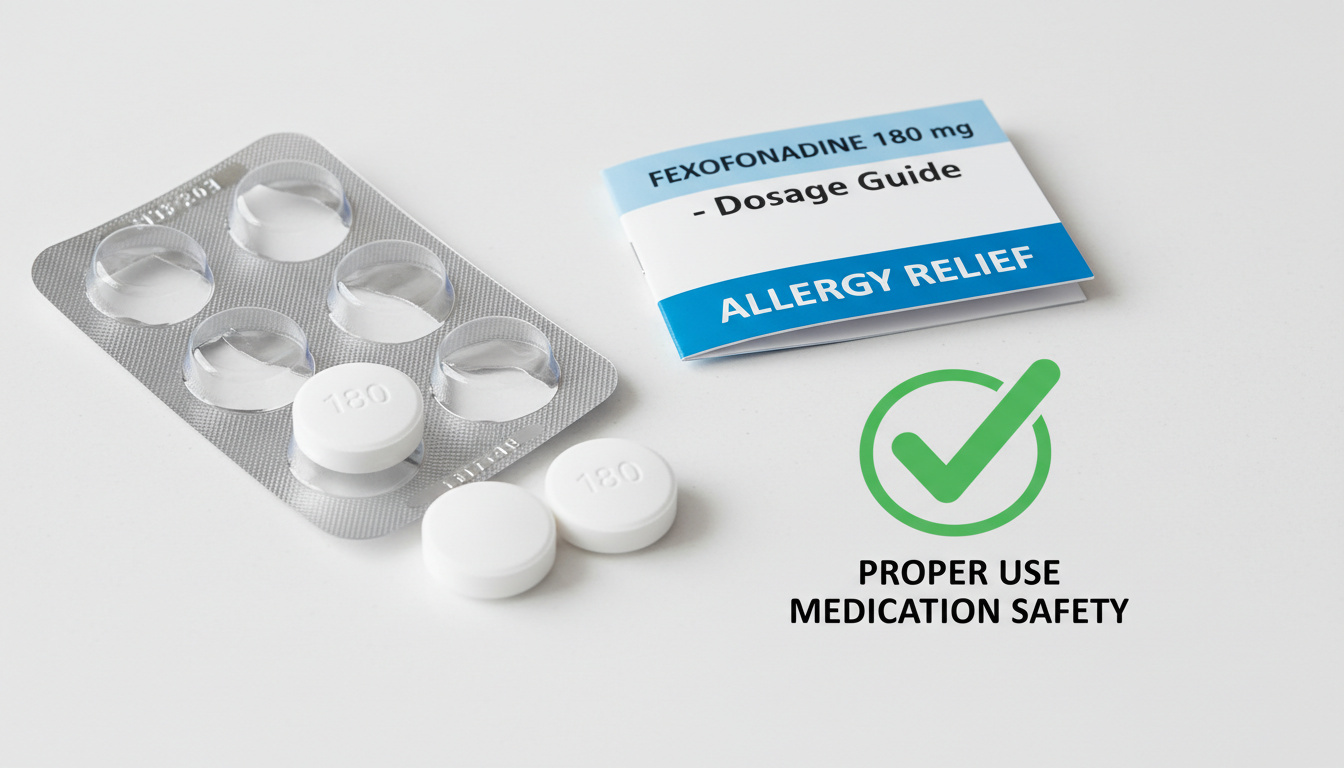

Taking two fexofenadine 180 mg tablets in a single day results in a 360 mg dose, raising immediate questions about safety boundaries and therapeutic limits for this widely used antihistamine.
Fexofenadine serves as a primary treatment for seasonal allergies and chronic hives in adults and children over six years. The medication functions as a second-generation antihistamine designed to minimize drowsiness while blocking histamine receptors.
Despite its availability over the counter in many regions, dosing guidelines vary between regulatory authorities, creating confusion about whether doubling the standard dose provides better symptom relief or poses health risks. Understanding the evidence-based limits requires examining clinical trial data, pharmacological safety margins, and specific population considerations.
Can I Take Two Fexofenadine 180 mg Tablets?
| Standard Adult Dose | 180 mg once daily or 60 mg twice daily |
| Maximum Daily Intake | 180 mg per 24 hours under standard guidelines |
| Overdose Risk Profile | Low toxicity; wide safety margin demonstrated in clinical studies |
| When to Consult Medical Help | Persistent adverse effects or renal impairment concerns |
- Taking two 180 mg tablets delivers 360 mg, exceeding standard recommendations by 100%.
- Clinical evidence indicates no additional therapeutic benefit from doses exceeding 60 mg twice daily.
- Studies demonstrate safety at doses up to 800 mg single administration and 690 mg twice daily for 28 days.
- Patients with reduced kidney function require adjusted dosing of 60 mg daily.
- Children aged 6 to 11 years should receive 30 mg twice daily, never the adult 180 mg tablet.
- Absorption improves significantly when taken before meals rather than after food.
- Why Increase Mounjaro Dose Gradually illustrates the importance of following prescribed medication increments.
| Parameter | Clinical Guidance |
|---|---|
| Adult Allergic Rhinitis | 180 mg once daily or 60 mg twice daily |
| NHS Hay Fever Recommendation | 120 mg once daily |
| Chronic Urticaria (Hives) | 180 mg once daily |
| Pediatric Dosing (6-11 years) | 30 mg twice daily |
| Maximum Studied Single Dose | 800 mg |
| Maximum Studied Multi-Day Dose | 690 mg twice daily for 28 days |
| Long-Term Safety Data | 240 mg once daily for one year |
| Renal Impairment Adjustment | 60 mg once daily |
| Administration Requirement | Before meals for optimal absorption |
| Therapeutic Ceiling Effect | No benefit above 60 mg twice daily |
What Is the Recommended Maximum Dose of Fexofenadine?
Regulatory agencies establish different maximum thresholds depending on the condition being treated and regional licensing. The Mayo Clinic confirms that adults and children over 12 may take either 60 mg twice daily or 180 mg once daily for seasonal allergic rhinitis.
Is 180 mg Considered the Definitive Daily Limit?
While 180 mg represents the standard once-daily dose for adults, the NHS recommends 120 mg once daily specifically for hay fever management. This discrepancy reflects differences in licensing rather than safety concerns. According to electronic medicines compendium data, 180 mg once daily remains the conventional ceiling for chronic idiopathic urticaria.
Research published in medical monographs indicates that dosages exceeding 60 mg twice daily do not appear to provide additional therapeutic benefit, suggesting a pharmacological ceiling effect regardless of safety margins.
How Does Kidney Function Alter Safe Dosage?
Patients with impaired renal function or those undergoing hemodialysis require immediate dose reduction to 60 mg daily, according to MedCentral. This adjustment also applies to children aged 6 to 11 years with renal impairment, who should receive 30 mg daily rather than the standard pediatric twice-daily dosing.
Adults with compromised kidney function should not exceed 60 mg daily. Children in the same category require reduction to 30 mg daily. Standard 180 mg dosing may accumulate in these populations, necessitating medical supervision.
What Happens If I Take Too Much Fexofenadine?
Accidental ingestion of 360 mg through two 180 mg tablets enters a dosage range that clinical trials have explicitly studied. NHS trust documentation and peer-reviewed research demonstrate that single doses up to 800 mg produced no clinically significant adverse reactions compared to placebo.
Clinical Evidence on High-Dose Safety
Investigators administered multiple doses of 690 mg twice daily for 28 days without observing adverse effects. Additionally, subjects tolerated 240 mg once daily for one year without complications. Cardiac monitoring revealed no significant QTc interval changes even at these elevated levels, distinguishing fexofenadine from first-generation antihistamines with known cardiac risks.
Clinical trials demonstrate an exceptional safety profile with single doses up to 800 mg. While exceeding 180 mg daily offers no therapeutic advantage for allergies, the pharmacological safety margin significantly exceeds the standard dose.
Immediate Response to Accidental Overdose
Despite the favorable safety data, medical guidance should be sought following any suspected overdose. Specific overdose symptoms remain undocumented in available literature, though the medication’s nonsedating properties reduce the risk of respiratory depression common with older antihistamines.
Can I Take Extra Fexofenadine for Severe Allergies?
Some patients consider exceeding 180 mg during peak allergy seasons or severe urticaria flare-ups. While standard guidelines cap daily use at 180 mg, specialist protocols documented by NHS trusts have employed unlicensed doses up to four times the recommended amount (approximately 720 mg) for treatment-resistant chronic urticaria under strict medical supervision.
This off-label application does not translate to general allergy management. For typical seasonal rhinitis, evidence confirms no symptomatic improvement beyond standard dosing. Patients experiencing inadequate control should consult healthcare providers about alternative therapies rather than self-escalating antihistamine doses. Budgeting for comprehensive care, like understanding How Much Does Invisalign Cost, requires similar attention to documented treatment plans.
Doses up to 720 mg daily have been used specifically for severe urticaria in clinical settings. Such regimens require physician oversight and should not be attempted without medical consultation.
How Long Can Fexofenadine Be Taken Safely?
Understanding the temporal parameters of fexofenadine use helps contextualize both acute overdose scenarios and long-term management strategies.
- Immediate Absorption: Administration before meals optimizes bioavailability from the first dose.
- Short-Term High-Dose: Clinical trials established safety for 690 mg twice daily maintained over 28 consecutive days.
- Extended Use: Data confirms 240 mg once daily remains safe for continuous use up to one year.
- Standard Maintenance: The recommended 180 mg daily dose may be continued indefinitely within licensed parameters, though specific studies beyond one year were not identified.
Established Facts Versus Unknowns in Fexofenadine Dosing
Distinguishing verified pharmacological data from areas requiring further investigation helps patients make informed decisions about accidental or intentional dose escalation.
| Established Information | Uncertain or Undefined Areas |
|---|---|
| Maximum recommended standard dose is 180 mg daily | Whether 360 mg provides superior symptom control to 180 mg |
| No therapeutic benefit above 60 mg twice daily | Specific symptom profiles of fexofenadine overdose |
| Safe at 800 mg single dose and 690 mg twice daily | Long-term effects beyond one year of daily use |
| Renal impairment requires 60 mg daily maximum | Interaction effects with specific food types beyond general recommendations |
| Non-sedating with favorable cardiac profile | Individual variation in drug metabolism rates |
How Does Fexofenadine Compare to Other Antihistamines?
Fexofenadine belongs to the second-generation antihistamine class developed specifically to address limitations of earlier medications. Unlike first-generation compounds that cross the blood-brain barrier causing sedation and potentially affecting cardiac rhythms, fexofenadine demonstrates minimal central nervous system penetration and no significant QTc interval changes even at elevated doses.
This pharmacological profile explains why clinical studies tolerated doses exceeding 800 mg without the cardiac complications associated with older antihistamines. The medication’s primary elimination through the kidneys rather than hepatic metabolism also contributes to its distinct safety profile compared to drugs requiring liver processing.
What Do Health Authorities Say About Dosing Limits?
Official guidance from national health services and regulatory bodies provides the foundation for safe consumption practices.
For hay fever, the usual dose is 120 mg once daily. For hives and other allergies, the standard dose is 180 mg once daily. Do not exceed these amounts without medical advice.
NHS Medicines Guidance
Single doses up to 800 mg and multiple doses up to 690 mg twice daily for 28 days produced no clinically significant adverse reactions compared to placebo.
Clinical Safety Data, NHS Foundation Trust
Final Takeaways on Fexofenadine 180 mg Safety
Taking two 180 mg fexofenadine tablets creates a 360 mg dose that exceeds standard recommendations yet falls well within demonstrated clinical safety margins. While no therapeutic advantage exists for allergy symptom control beyond 180 mg daily, the medication’s wide safety index suggests accidental double-dosing unlikely causes serious harm in healthy adults. Patients with renal impairment, pediatric populations, or those experiencing persistent symptoms should consult healthcare providers rather than self-adjusting doses.
Common Questions About Fexofenadine Dosing
Can I take fexofenadine twice a day instead of once?
Yes, adults may take 60 mg twice daily rather than 180 mg once daily for allergic rhinitis. Both regimens provide equivalent 24-hour coverage.
Should I take fexofenadine before or after food?
Take fexofenadine before meals. Absorption decreases significantly when taken after food, particularly high-fat meals.
Is it safe to take 180 mg fexofenadine every day for a year?
Clinical data supports safety at 240 mg daily for one year. The standard 180 mg dose falls below this threshold, though specific one-year studies at exactly 180 mg were not documented.
Can I take fexofenadine if I have kidney disease?
Adults with renal impairment should limit intake to 60 mg daily. Children aged 6-11 with kidney issues require 30 mg daily. Consult nephrologists for specific guidance.
Will taking 360 mg of fexofenadine make me sleepy?
Unlikely. Fexofenadine is a non-sedating antihistamine. Clinical studies observed no increased drowsiness at doses up to 800 mg compared to placebo.
What should I do if I accidentally took two 180 mg tablets?
Seek medical guidance if concerned, though serious harm is unlikely. The safety margin accommodates doses up to 800 mg in clinical settings. Monitor for unusual symptoms.

Hanna oversees reviews and standards at DailyBrief. With a background in health and consumer journalism, she second-reads our health, money and other sensitive articles against primary sources — the NHS, NICE, Mayo Clinic and official government guidance — before they publish, and writes much of our wellbeing and personal-finance coverage.