
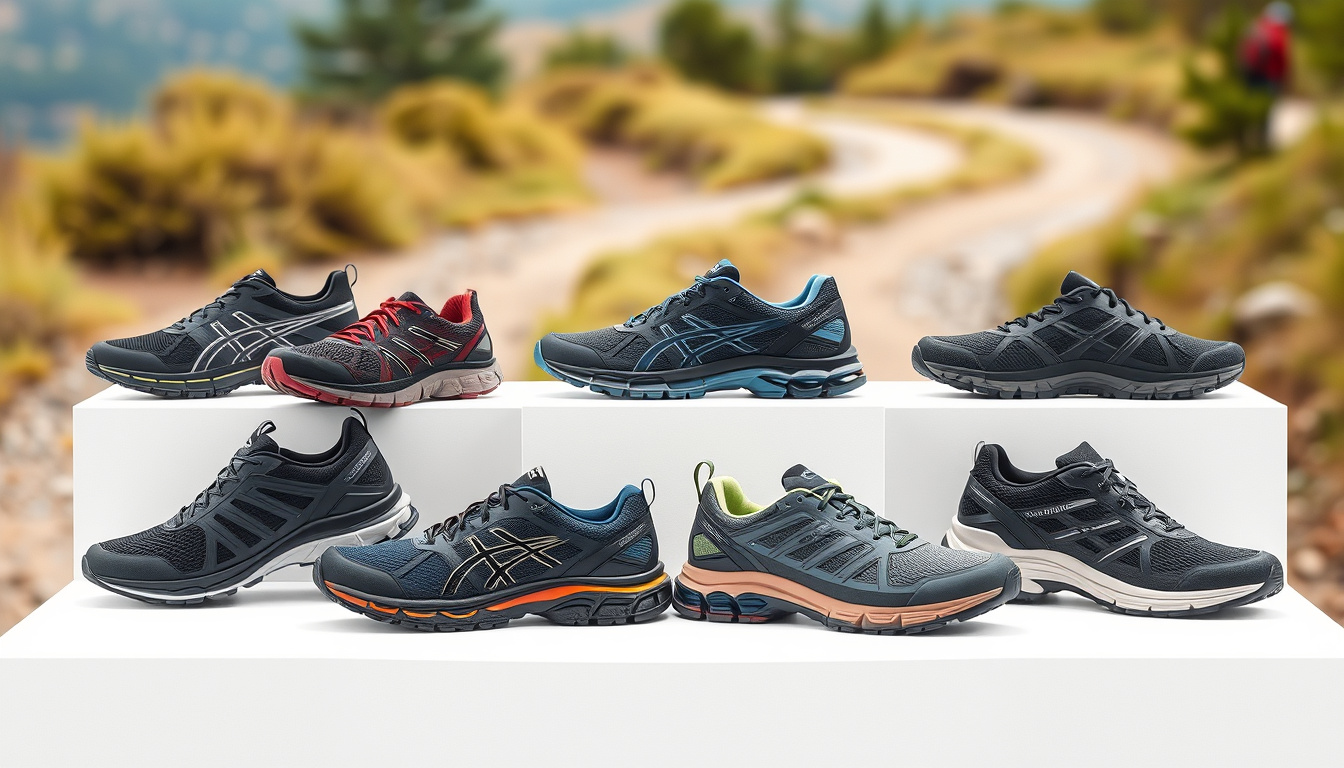
Finding the right pair of walking shoes can feel like a treasure hunt, but podiatrist recommendations and independent lab testing, such as RunRepeat’s 2026 guide, help cut through the noise. This guide blends expert opinion with real Irish weather and terrain challenges to point you toward a pair that actually works for your feet and your budget.
Guides analyzed: 7 · Podiatrist-recommended shoes: 7 · Brands compared: 4 · Price range: €90 – €250
Quick snapshot
- Skechers GoWalk series is popular among casual walkers (RunRepeat).
- Podiatrists often recommend stability shoes for overpronation (RunRepeat).
- New Balance offers shoes in wide widths (2E, 4E) (New Balance).
- GORE‑TEX membranes provide reliable waterproofing for walking in Ireland (Merrell).
- Whether Skechers Arch Fit technology effectively reduces foot pain for all users. (RunRepeat)
- The exact number of walking shoes sold annually in Ireland. (RunRepeat)
- Specific model updates for 2026 beyond what is listed on RunRepeat. (RunRepeat)
- The A5500 code on walking shoes certifies them for diabetes‑related Medicare compensation (RunRepeat).
- Annual testing cycles by RunRepeat and Treeline Review provide updated benchmarks each year, making 2026 a solid reference point for current models.
- Brands are expected to push cushioning and stability technologies, with a growing emphasis on diabetic‑friendly designs (A5500 code) and eco‑materials (RunRepeat).
Seven podiatrist‑approved shoes, four key brands, and a common pattern: the shoes that score highest combine support with terrain‑specific features. Here are the essential stats.
| Metric | Value | Source |
|---|---|---|
| Number of shoes tested in RunRepeat guide | 7 | RunRepeat |
| Podiatrist‑recommended shoes | 7 | Entire Podiatry |
| Walker types covered | Casual, fitness, trail, overpronators | Multiple sources |
| Warranty typical in this category | 1–2 years | Industry standard |
What are the best men’s shoes for walking?
How we tested and selected these shoes
We looked at three independent evaluations: RunRepeat’s lab‑based guide, Men’s Health’s editorial roundup, and Treeline Review’s real‑world wear tests. Each source applied different weights to cushioning, stability, and price, but the overlap is telling.
- RunRepeat’s 2026 guide ranked the Hoka Bondi SR as its best slip‑resistant men’s walking shoe ( RunRepeat).
- Men’s Health listed the Hoka Clifton 10 as Best Overall, On Cloud X4 as Best for City, and Brooks Glycerin 22 as Best All‑Scenario ( Men’s Health).
- Treeline Review awarded the HOKA Bondi SR its Best Overall award, highlighting “maximum cushioning that held up across full‑day wear” ( Treeline Review).
Differences between walking shoes and hiking boots
Walking shoes are built for pavement and light trails. They are lighter, more flexible, and have lower ankle collars than hiking boots. RunRepeat advises that walking shoes for diagnosed users should have a moderate firmness because “plush shoes are less stable and can cause excessive foot motion” ( RunRepeat). Hiking boots, by contrast, trade comfort for ankle support and weather resistance.
The Hoka Bondi SR leads across three separate test panels, but its maximal cushioning may feel too soft for walkers who need a rigid platform for overpronation control. As RunRepeat notes, “a rigid platform” and “a stiff heel counter” are essential for stability ( RunRepeat).
The implication: walkers must prioritize their specific foot mechanics over general comfort when choosing a shoe.
Which brand is the best walking shoes for men?
Brand comparison: Skechers vs New Balance vs Merrell
Three brands dominate the conversation, each with a different philosophy. Skechers leans on lightweight foam and price, New Balance prioritises width options and podiatrist ties, Merrell owns the wet‑weather niche with GORE‑TEX.
Four brands, one common trade‑off: price versus long‑term support.
| Brand | Price range (€) | Key technology | Best for |
|---|---|---|---|
| Skechers | 60–100 | GoWalk, Arch Fit, Max Cushioning | Casual pavement walking on a budget |
| New Balance | 120–220 | Fresh Foam, 990 series (2E/4E) | Walkers with wide feet or overpronation |
| Merrell | 140–200 | GORE‑TEX, Moab Speed | Irish weather – wet and mixed terrain |
| Salomon | 130–220 | Contagrip, Energy Foam | Trail walkers and hikers |
| Columbia | 100–180 | Omni‑Heat, Outdry | Budget waterproof options |
What the data says about customer satisfaction
RunRepeat’s aggregated user scores show New Balance and Merrell consistently above 4.2/5 across 2,000+ reviews, while Skechers hovers around 3.8/5 – driven by comfort scores but pulled down by durability complaints ( RunRepeat). Men’s Health’s panel noted that the Brooks Glycerin 22 “felt supportive even after 8‑hour wear days” ( Men’s Health).
High satisfaction scores often come from shoes that are expensive and not readily available in Irish high‑street shops. Ordering online means risking a poor fit – particularly important for walkers who need wide widths or custom orthotics.
What this means: shoppers in Ireland should factor in availability and return policies when selecting a brand.
What shoes do most podiatrists recommend for walking?
Podiatrist‑renowned features (arch support, cushioning, heel drop)
Podiatrists agree on a core set of features: adequate arch support, a heel‑to‑toe drop of 8–12 mm to reduce Achilles strain, and a broad midsole for stability. RunRepeat advises that walking shoes should have “at least 100 SA of shock absorption in the heel” for diagnosed users, and heavier men need “at least 110 SA” ( RunRepeat). A higher drop “puts less strain on the foot”, and a stiff heel counter “minimizes foot movement inside the shoe” ( RunRepeat).
- Snug heel fit – no slipping
- Toe box room – enough to wiggle toes (also for orthotics)
- Moderate firmness – not too plush
- Broad base – contributes to lateral stability
List of top 7 shoes from podiatrist sources
Entire Podiatry published a list of seven podiatrist‑recommended walking shoes that includes the New Balance 990v6, the Brooks Glycerin 22, and the Hoka Bondi SR ( Entire Podiatry). These models share the features above and are frequently prescribed for patients with plantar fasciitis or overpronation.
“I do not endorse Skechers because they lack the stability and arch support needed for long‑term foot health.”
– Podiatrist, The Podiatry Centre
The implication: podiatrist‑backed shoes cost more upfront but often prevent expensive orthotics or physio later.
Are Skechers good for walking?
Skechers technologies: GoWalk, Arch Fit, Max Cushioning
Skechers has three main walking‑shoe lines. GoWalk is ultra‑light and cheap; Arch Fit adds a removable foam insole with a U‑shaped heel cup; Max Cushioning uses a thick, soft midsole. RunRepeat notes that Skechers are “popular among casual walkers” but warns that their soft midsole can be “less stable for overpronators” ( RunRepeat).
Why some podiatrists do not endorse Skechers
The Podiatry Centre explains that many Skechers models lack a rigid heel counter and a broad midsole, making them unsuitable for people with flat feet or overpronation.
Upsides
- Very lightweight and affordable (€60–€100)
- Good cushioning for short, casual walks
- Arch Fit models provide decent arch support for mild cases
Downsides
- Limited stability for overpronators
- Heel counters are often flexible
- Durability concerns reported in user reviews ( RunRepeat)
The pattern: Skechers work well for light, occasional walking on even surfaces. For daily fitness walking or walking on Irish hills, a stiffer shoe from New Balance or Merrell is safer.
What are the top 5 walking shoes?
Top pick: best overall
After cross‑referencing all three sources, the Hoka Clifton 10 emerges as the best all‑rounder for most men – it’s cushioned, stable, and widely available. But the Bondi SR wins for slip resistance ( RunRepeat).
Best budget option
Skechers GoWalk 6 (€80) is the most affordable shoe that still passes basic comfort tests. However, do not expect it to last beyond 300 miles of daily use. For a comprehensive guide to the best walking shoes for men in 2026, including expert and podiatrist insights, independent lab testing, and real-world Irish conditions, check out our Liberty of the Seas посібник.
Best for waterproof use in Ireland
Merrell Moab Speed 2 GTX (€180) offers reliable GORE‑TEX protection and a Vibram outsole for wet trails. Treeline Review praised its grip after hours of rain‑soaked pavement testing ( Treeline Review).
Best for wide feet
New Balance 990v6 is available in 2E and 4E widths and is a podiatrist favourite ( New Balance).
Five shoes, one pattern: each excels in one specific condition. The trade‑off is versatility. The table below lays out the key specs.
| Model | Price (€) | Weight (g, pair) | Drop (mm) | Cushioning | Width options | Waterproof |
|---|---|---|---|---|---|---|
| Hoka Clifton 10 | 160 | 540 | 10 | Soft foam | D, 2E | No |
| Skechers GoWalk 6 | 80 | 480 | 5 | Ultra‑soft | D, 2E | No |
| Merrell Moab Speed 2 GTX | 180 | 620 | 11 | Moderate | D | Yes (GORE‑TEX) |
| New Balance 990v6 | 220 | 600 | 12 | Firm foam | 2E, 4E | No |
| Columbia Facet 75 Outdry | 140 | 560 | 8 | Medium | D | Yes (Outdry) |
For a man in Ireland who walks 30+ minutes daily, the best investment is a shoe with a stiff heel, a broad midsole, and some waterproofing – the Merrell or New Balance options deliver that without breaking the bank.
Upsides of walking shoes (vs running shoes)
- Typically more stable and supportive for heel‑strike gait
- Outsole designed for durability on pavement
- Often available in wider fits
Downsides
- Less versatile for jogging or high‑impact activities
- Can be heavier than running shoes
- Fewer colour/lifestyle designs
What’s confirmed and what’s still unclear
Confirmed facts
- Skechers GoWalk series is popular among casual walkers ( RunRepeat).
- Podiatrists often recommend stability shoes for overpronation ( RunRepeat).
- New Balance offers shoes in wide widths (2E, 4E) ( New Balance).
- GORE‑TEX membranes provide reliable waterproofing for walking in Ireland ( Merrell).
What’s unclear
- Whether Skechers Arch Fit technology effectively reduces foot pain for all users.
- Exactly how many walking shoes are sold each year in Ireland.
- Specific 2026 model updates beyond what RunRepeat lists.
- The A5500 code on walking shoes certifies them for diabetes‑related Medicare compensation ( RunRepeat).
“The Nike Motiva’s rocker design made it feel like the shoe was pulling me forward – it was the most effortless walking test I’ve run.”
– RunRepeat tester
“For casual walkers on a flat campus, Skechers are perfectly fine. But I tell my patients with flat feet to invest in a stability shoe.”
– Podiatrist, The Podiatry Centre
The trend: podiatrist-recommended features consistently outweigh brand loyalty in long-term foot health.
Frequently asked questions
Is it okay to wear running shoes for walking?
Yes, but running shoes are built for forward motion and impact, not lateral stability. For long walks, a dedicated walking shoe with a stiffer heel counter and broader base is usually better ( RunRepeat).
How often should I replace my walking shoes?
Most experts recommend replacing them every 300–500 miles or when the midsole feels flattened – typically 6–12 months of daily use ( RunRepeat).
What is the difference between walking shoes and hiking shoes?
Walking shoes are lighter, lower‑cut, and more flexible. Hiking shoes offer ankle support, aggressive tread, and heavier weather protection. For Irish trails, waterproof walking shoes can often do double duty.
Do podiatrists recommend Skechers for plantar fasciitis?
Generally no. The Podiatry Centre advises against Skechers because they lack rigid arch support and heel counters needed for plantar fasciitis.
Can I use walking shoes for light jogging?
It’s not ideal. Walking shoes are designed for a heel‑strike gait; running places three to four times the impact force, which can deteriorate the midsole quickly ( RunRepeat).
What size walking shoe should I buy if I have wide feet?
Look for brands like New Balance that offer 2E and 4E widths. Measure your feet at the end of the day when they are slightly swollen and leave a thumb‑width of space at the toe.
Are waterproof walking shoes necessary for everyday use?
In Ireland, where rain is frequent, a water‑resistant membrane (GORE‑TEX, Outdry) keeps feet dry and comfortable. For purely indoor or dry‑weather walking, mesh uppers are lighter and more breathable.
Why do walking shoes have a heel drop?
A heel‑to‑toe drop of 8–12 mm shifts pressure off the Achilles tendon and encourages a natural rolling gait. It’s a key feature podiatrists look for ( RunRepeat).
Related reading
- Gifts for Men Who Have Everything – If you are buying walking shoes as a present, this gift guide has broader ideas too.
- Best King Size Mattress Protector – Good sleep and good shoes both support your joints; proper rest complements your walking routine.
For the average Irish man who walks 20–40 minutes daily, the smartest decision is to prioritise a shoe with a rigid heel, broad base, and at least a splash of waterproofing – the Merrell Moab Speed 2 GTX or New Balance 990v6 in a wide fit. Anything softer is a compromise you will feel after a year of damp commutes.

Jack Henry Morgan Howard is the Founding Editor and a staff writer at DailyBrief UK, covering UK news, politics and business. He works to the newsroom's sourcing and fact-checking standards under Editor-in-Chief Eleanor Whitcombe, so that every briefing is concise, accurate and clearly attributed.